.png)
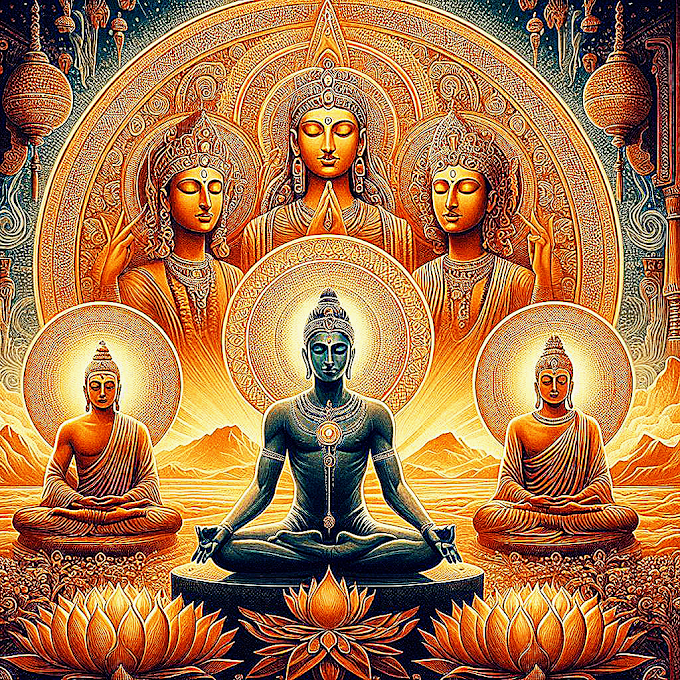
Prana in Haṭha Yoga is the vital force flowing through breath, nāḍīs, and chakras—balancing body, mind, and spirit for liberation.
.png) |
| The Concept of Prana in Hatha Yoga |
In the Hatha Yoga system, Prāṇa is not merely breath, nor just energy. It is the subtle, intelligent force underlying all biological, psychological, and spiritual processes. Rooted in Indian philosophical systems—particularly Vedanta, Sankhya, and Tantra—prāṇa is described as the vital energy or life force that animates all living beings and maintains the functions of consciousness, body, and nature.
This article aims to engineer a complete framework of prāṇa, from its philosophical origin and metaphysical construction to its yogic applications and physiological mappings, providing scriptural references and analytical precision.Scope and Objective
Objective: To construct a multi-dimensional, interdisciplinary model of Prāṇa incorporating:
Classical definitions (Upanishadic and Yogic)
Functional dynamics (Pancha Prāṇa system)
Philosophical significance in Indian metaphysics
Mechanism in Hatha Yoga (with prāṇāyāma and chakra systems)
Practical applications (yogic, psychological, physiological)
Modern interpretations in the context of bioenergetics and consciousness studies
Classical Definition and Origin of Prāṇa
A. Etymology and Basic Meaning
The Sanskrit word Prāṇa (प्राण) is derived from the root an (to breathe, to move) with the prefix pra (constant, forward, primary). Thus, Prāṇa literally means “the force of constant movement”. It is not merely the physical act of breathing but the vital principle of life, the subtle energy that animates all beings.
Pra → continuity, constancy, forward motion.
An → breath, movement, vibration.
Together, Prāṇa implies eternal motion, the ceaseless current of life. In Indian philosophy, it is considered the first-born of consciousness (Ātmā), the bridge between the unmanifest Self and the manifest cosmos.
B. Scriptural Sources
1. Praśna Upaniṣad (3.3)
“Ātmataḥ prāṇaḥ samabhavat, yathāiṣā puruṣa‑chāyā, evam eṣa ātmanaḥ prāṇaḥ.” “From the Self, prāṇa is born. Just as a shadow follows the body, so prāṇa follows the Self.”
Explanation: This verse establishes Prāṇa as the inseparable companion of Ātman (Self). Just as a shadow cannot exist without the body, Prāṇa cannot exist without consciousness. It is the first manifestation of life when pure awareness engages with matter. The Upaniṣadic seers thus identify Prāṇa as the link between the transcendent Self and embodied existence.
Scientific Parallel: Modern physiology confirms that life begins with the first breath and ends with the last. Oxygen intake drives cellular respiration, producing ATP (adenosine triphosphate), the energy currency of life. Without this constant flow, consciousness ceases. Thus, the Upaniṣadic insight that Prāṇa is “born of the Self” resonates with the scientific view that life-force is sustained by breath and energy metabolism.
2. Chāndogya Upaniṣad (5.1.15)
“Prāṇo vai devatāḥ śarīrasthaḥ sarvam idam abhibhavati.” “Prāṇa is the deity within the body that governs everything.”
Explanation: Here, Prāṇa is elevated to the status of a deity (devatā), the inner ruler of the body. All organs—speech, sight, hearing, mind—function only because Prāṇa animates them. The text emphasizes that Prāṇa is not subordinate to the senses; rather, the senses depend on Prāṇa.
Scientific Parallel: This aligns with the modern understanding of the autonomic nervous system (ANS), which regulates involuntary functions like heartbeat, digestion, and respiration. Just as the Upaniṣads describe Prāṇa as the “governing force,” science recognizes that without the ANS and metabolic energy, no organ can function.
3. Bṛhadāraṇyaka Upaniṣad (1.3.23)
“Prāṇo vai brahma.” “Prāṇa is verily Brahman.”
Explanation: This bold declaration identifies Prāṇa with Brahman, the ultimate reality. It suggests that the same life-force that sustains the body is also the cosmic principle sustaining the universe. Thus, Prāṇa is both microcosmic (individual breath) and macrocosmic (cosmic wind, solar energy, universal vibration).
Scientific Parallel: In physics, energy is neither created nor destroyed but only transformed. The yogic view of Prāṇa as cosmic energy manifesting in individual beings parallels the scientific principle of energy conservation and transformation.
4. Maitrī Upaniṣad (2.6)
“Prāṇo hi bhūtānām āyatanam, prāṇe sarvam pratiṣṭhitam.” “Prāṇa is the abode of all beings; in Prāṇa everything is established.”
Explanation: This verse universalizes Prāṇa as the substratum of existence. Just as fish cannot live without water, beings cannot live without Prāṇa. It is the field in which life arises, is sustained, and dissolves.
Scientific Parallel: This resonates with the ecological view that life depends on the biosphere’s energy flow—oxygen cycles, photosynthesis, and respiration. Without these energy exchanges, no life form can survive.
C. Prāṇa in Haṭha Yoga
The Haṭha Yoga Pradīpikā (2.2) defines Haṭha as the union of Prāṇa (solar, dynamic force) and Manas (lunar, mental force):
“Haṭhaḥ prāṇa‑manasor aikyaṃ.” “Haṭha is the union of Prāṇa and mind.”
This reflects the yogic insight that breath and mind are intimately connected. When Prāṇa is disturbed, the mind is restless; when Prāṇa is steady, the mind becomes still.
Scientific Parallel: Research on prāṇāyāma (breath regulation) shows that slow, deep breathing reduces cortisol, increases heart rate variability (HRV), and enhances alpha brainwave activity—physiological markers of calmness and focus. This validates the yogic claim that control of Prāṇa steadies the mind.
D. The Five Major Prāṇas (Pañca‑Prāṇa)
Classical texts divide Prāṇa into five primary functions:
| Prāṇa | Location | Function | Scientific Correlate |
|---|---|---|---|
| Prāṇa | Chest, lungs | Inhalation, circulation of oxygen | Respiratory drive, oxygen uptake |
| Apāna | Lower abdomen | Elimination, reproduction | Excretory & reproductive physiology |
| Samāna | Navel region | Digestion, assimilation | Gut-brain axis, metabolism |
| Udāna | Throat, head | Speech, upward movement, consciousness | Vagus nerve, cortical arousal |
| Vyāna | Whole body | Circulation, coordination | Autonomic nervous system, circulation |
Praśna Upaniṣad (2.4–2.5) describes these divisions, showing how Prāṇa differentiates into specialized functions sustaining life.
E. Scientific Insights into Prāṇa
Respiration and Oxygen Exchange
Prāṇa as inhalation aligns with oxygen uptake and cellular respiration.
Studies show that slow breathing (6 breaths/min) optimizes oxygen exchange and baroreflex sensitivity.
Autonomic Nervous System (ANS)
Yogic texts equate Idā (moon) with parasympathetic activity and Piṅgalā (sun) with sympathetic activity.
Balance of Prāṇa mirrors ANS homeostasis.
Brainwave Regulation
EEG studies show alternate nostril breathing (Nāḍī Śodhana) increases alpha coherence, reducing stress.
This supports the yogic claim that Prāṇa harmonizes ida and piṅgala nāḍīs.
Psychoneuroimmunology
Controlled breathing reduces cortisol and boosts immunity.
This echoes the Upaniṣadic idea that Prāṇa sustains ojas (vital essence).
F. Philosophical Significance
Microcosm–Macrocosm Unity: Prāṇa in the body reflects cosmic Prāṇa.
Bridge of Consciousness: Prāṇa links body, mind, and spirit.
Path to Liberation: By mastering Prāṇa through prāṇāyāma, the yogi awakens kuṇḍalinī and attains samādhi.
The classical definition and origin of Prāṇa reveal it as both etymologically “eternal motion” and scripturally the first-born of the Self. The Upaniṣads describe Prāṇa as the inner deity, the foundation of life, and even Brahman itself. Haṭha Yoga systematizes this insight into practical methods of Prāṇa regulation, while modern science validates its physiological and psychological effects.
Thus, Prāṇa is not merely breath—it is the universal life-force, the bridge between consciousness and matter, and the key to health, balance, and spiritual realization.
Functional Model of Prāṇa: The Pañca Prāṇas in Haṭha Yoga
Haṭha Yoga presents a detailed model of Prāṇa, the vital life force, by subdividing it into five major vāyus (winds or currents). These subdivisions—Prāṇa, Apāna, Samāna, Udāna, and Vyāna—explain how life energy governs physiological, psychological, and spiritual functions. The Gheraṇḍa Saṃhitā (5.15–20) emphasizes that these vāyus must be purified and balanced through prāṇāyāma for the yogi to progress toward higher states of consciousness.
 |
| The Concept of Prana in Hatha Yoga |
Scriptural Foundation
Gheraṇḍa Saṃhitā (5.15–20)
The text describes the role of prāṇāyāma in purifying the vāyus:
“Prāṇāpānau samau kṛtvā samānaṃ ca samāhitaḥ | Udānaṃ vyāna saṃyuktaṃ prāṇāyāmaḥ prakīrtitaḥ ||” (GS 5.15) “When prāṇa and apāna are balanced, and samāna, udāna, and vyāna are harmonized, that is called prāṇāyāma.”
“Prāṇāyāmena śuddhyanti sarve doṣāḥ śarīriṇām | Malāḥ śarīra saṃbhūtāḥ śuddhyante prāṇasaṃyamāt ||” (GS 5.16) “Through prāṇāyāma all impurities of the body are destroyed; by control of prāṇa, the bodily wastes are purified.”
Thus, the text makes clear that prāṇāyāma is not merely breath control but the harmonization of the five vāyus, leading to purification of both body and mind.
The Five Major Prāṇas
1. Prāṇa Vāyu – The Upward Current
Function: Governs inhalation, heart function, and consciousness.
Location: Chest and heart region.
Movement: Upward.
Explanation: Prāṇa vāyu is the central life force that sustains respiration and cardiac activity. It is said to “fan the flame of consciousness,” keeping awareness alive. In yogic practice, it is regulated through deep diaphragmatic breathing, nāḍī śodhana, and ujjāyī prāṇāyāma.
Scientific Correlate:
Modern physiology identifies this with the respiratory drive and autonomic regulation of the heart.
Studies show that slow breathing (6 breaths/min) increases heart rate variability (HRV), a marker of parasympathetic balance, and enhances oxygen uptake efficiency.
Neuroimaging demonstrates that controlled inhalation activates the prefrontal cortex, improving attention and emotional regulation.
2. Apāna Vāyu – The Downward Current
Function: Governs elimination, grounding, and excretion.
Location: Pelvis, colon, and lower abdomen.
Movement: Downward.
Explanation: Apāna vāyu is responsible for excretion of urine, feces, and reproductive fluids. In yogic practice, it is sublimated upward through mūla bandha (root lock) and cleansing kriyās like basti. When apāna is harmonized with prāṇa, the yogi experiences stability and grounding.
Scientific Correlate:
Apāna corresponds to the pelvic autonomic nerves regulating bladder, bowel, and reproductive organs.
Pelvic floor exercises (akin to mūla bandha) are shown to improve continence and reproductive health.
Research in psychophysiology links grounding practices with reduced cortisol levels and improved stress resilience.
3. Samāna Vāyu – The Balancer
Function: Governs digestion, assimilation, and balance.
Location: Navel and abdomen.
Movement: Inward, toward the center.
Explanation: Samāna vāyu regulates the digestive fire (agni), ensuring proper assimilation of nutrients. It balances the opposing forces of prāṇa (upward) and apāna (downward). Yogic practices like nauli kriyā and agnisāra stimulate samāna, while dietary discipline (mitāhāra) supports its balance.
Scientific Correlate:
Samāna aligns with the gut-brain axis and enteric nervous system.
Research shows that yogic abdominal exercises improve vagal tone, enhance digestion, and reduce symptoms of irritable bowel syndrome (IBS).
Balanced digestion influences neurotransmitter production (e.g., serotonin), directly affecting mood and cognition.
4. Udāna Vāyu – The Ascending Current
Function: Governs speech, memory, and upward movement of energy.
Location: Throat and head.
Movement: Upward.
Explanation: Udāna vāyu is associated with speech, self-expression, and spiritual ascent. It activates higher centers of consciousness, particularly the viśuddhi (throat) and ājñā (third eye) chakras. Practices like OM chanting, bhrāmarī prāṇāyāma, and meditation strengthen udāna.
Scientific Correlate:
Chanting and humming stimulate the vagus nerve, reducing stress and enhancing memory consolidation.
fMRI studies show that OM chanting deactivates the amygdala (fear center) and activates the prefrontal cortex, supporting emotional regulation.
Udāna’s role in “upward movement” parallels findings that meditation enhances gamma synchrony in the brain, linked to higher awareness.
5. Vyāna Vāyu – The Expansive Current
Function: Governs circulation, coordination, and body balance.
Location: Entire body.
Movement: Expansive, outward.
Explanation: Vyāna vāyu pervades the entire body, distributing energy and coordinating movement. It integrates the functions of the other four vāyus. In yoga, dynamic āsanas, vinyāsa flows, and kumbhaka (breath retention) enhance vyāna’s circulation.
Scientific Correlate:
Vyāna corresponds to the autonomic nervous system and circulatory system.
Yoga improves vascular elasticity, blood flow, and neuromuscular coordination.
Clinical studies show that regular yoga practice reduces hypertension and improves overall cardiovascular health.
Integration of the Five Vāyus
The Haṭha Yoga Pradīpikā (4.27) states:
“Yadā tu prāṇāpānābhyāṃ suṣumnāṃ vindate dvijaḥ | Tadā samarasatvaṃ ca yogī samādhiṃ gacchati ||” “When prāṇa and apāna unite, the suṣumnā opens, and the yogi attains samādhi.”
This verse highlights that the union of prāṇa (upward) and apāna (downward) is the key to opening the suṣumnā nāḍī, the central channel through which kuṇḍalinī ascends. The other vāyus—samāna, udāna, and vyāna—support this union by balancing, uplifting, and integrating the energies.
Scientific Validation of the Pañca Prāṇa Model
Respiratory Science:
Slow breathing optimizes oxygen exchange and baroreflex sensitivity, mirroring prāṇa vāyu regulation.
Neurophysiology:
EEG studies show increased alpha and theta coherence during alternate nostril breathing, reflecting balance of ida (mental) and piṅgala (vital) currents.
Psychoneuroimmunology:
Regular prāṇāyāma reduces cortisol and increases immune markers (NK cells, IgA), echoing the yogic claim that prāṇa sustains vitality.
Cardiovascular Research:
Yoga improves heart rate variability (HRV), a marker of autonomic balance, directly linked to vyāna vāyu’s integrative role.
 |
| The Concept of Prana in Hatha Yoga |
The Pañca Prāṇas model in Haṭha Yoga demonstrates that life is sustained not by breath alone, but by a subtle orchestration of vital forces that govern every aspect of body, mind, and consciousness. By purifying and balancing these vāyus through prāṇāyāma, bandha, and kriyā, the yogi not only achieves physical health and mental clarity but also prepares the inner pathway for kuṇḍalinī to rise, leading ultimately to samādhi. In this way, the ancient vision of prāṇa as the “first-born of the Self” finds resonance with modern science, which affirms that regulated breath and energy balance profoundly shape human physiology, psychology, and spiritual potential.
Prāṇa in Haṭha Yoga: Practical Mechanism and Control
The science of Haṭha Yoga is fundamentally the science of Prāṇa—the vital energy that sustains life and consciousness. While philosophy explains Prāṇa as the first-born of Ātman (Self), Haṭha Yoga provides practical mechanisms to regulate, purify, and direct this energy for health, balance, and spiritual realization. The three pillars of this mechanism are Prāṇāyāma (breath control), Nāḍī Śodhana (purification of energy channels), and the Chakra system (psychic centers).
A. Prāṇāyāma (Breath Control)
Scriptural Foundation
The Haṭha Yoga Pradīpikā (2.2) states:
“Yadā tu prāṇo manasi līyate, tadā yogī samādhim āpnuyāt.” “When prāṇa is controlled, the mind becomes still. The yogi enters the state of union.”
This verse underscores the intimate link between breath and mind. As long as breath is restless, the mind is restless; when breath is stilled, the mind becomes steady.
Mechanism
Prāṇāyāma involves three phases:
Pūraka (inhalation): Drawing in prāṇa with awareness.
Kumbhaka (retention): Holding the breath to stabilize prāṇa and still the mind.
Recaka (exhalation): Releasing prāṇa, cleansing the system.
Through repeated cycles, the yogi learns to extend kumbhaka, which is said to awaken higher states of consciousness.
Scientific Correlates
Respiratory Physiology: Slow breathing (6 breaths/min) optimizes oxygen exchange and increases heart rate variability (HRV), a marker of autonomic balance.
Neuroscience: fMRI studies show that breath retention activates the insula and prefrontal cortex, regions linked to self-awareness and emotional regulation.
Psychology: Controlled breathing reduces cortisol, lowers anxiety, and enhances focus—mirroring the yogic claim that prāṇāyāma steadies the mind for meditation.
B. Nāḍī Śodhana (Purification of Energy Channels)
Scriptural Foundation
The Lesson‑18 (NCERT, Hatha Yog) explains:
“The word nāḍī is made of ‘nad’ which means flow or current. Nāḍīs are subtle channels through which prāṇic forces flow.”
The Haṭha Yoga Pradīpikā (2.5) adds:
“Yāvannādiṣu śuddhiḥ syāt, tāvat prāṇo na gacchati | Tasmāt śuddhiṃ prayatnena, kartavyaṃ yogibhiḥ sadā ||” “Until the nāḍīs are purified, prāṇa does not flow in suṣumnā. Therefore, purification must always be practiced by yogis.”
Mechanism
Idā Nāḍī (Moon, left): Cooling, mental, parasympathetic.
Piṅgalā Nāḍī (Sun, right): Heating, vital, sympathetic.
Suṣumnā Nāḍī (Central): Neutral, spiritual channel in the spinal cord.
When prāṇa flows equally in Idā and Piṅgalā, it enters Suṣumnā, enabling kuṇḍalinī to rise. Techniques like Nāḍī Śodhana Prāṇāyāma (alternate nostril breathing) purify these channels.
Scientific Correlates
Autonomic Nervous System: Idā corresponds to parasympathetic dominance (rest, digestion), Piṅgalā to sympathetic dominance (activity, arousal).
EEG Studies: Alternate nostril breathing increases alpha coherence, reducing stress and enhancing cognitive performance.
Clinical Evidence: Research shows that Nāḍī Śodhana lowers blood pressure, improves lung function, and balances hemispheric brain activity.
C. Chakra System
Scriptural Foundation
The Śiva Saṃhitā (5.78) describes chakras as centers of subtle energy:
“Mūlādhārādārabhya, yāvat sahasrāraṃ sthitam | Tatra cakrāṇi jñeyāni, yogibhiḥ siddhi‑dāyinī ||” “From Mūlādhāra to Sahasrāra, the chakras are established. Yogis know them as givers of powers and realization.”
The Lesson‑18 (NCERT, Hatha Yog) further explains:
Chakras are “switches” that open patterns of behavior, thought, and emotion.
Concentration on chakras stimulates energy flow and awakens subtle powers.
Mechanism
Prāṇa energizes seven major chakras along the Suṣumnā:
Mūlādhāra (Root): Stability, survival.
Svādhiṣṭhāna (Sacral): Desire, creativity.
Maṇipūra (Navel): Power, digestion.
Anāhata (Heart): Love, compassion.
Viśuddhi (Throat): Purification, expression.
Ājñā (Third Eye): Intuition, wisdom.
Sahasrāra (Crown): Union with consciousness.
Through kriyās, bandhas, and prāṇāyāma, prāṇa is directed upward, activating each chakra and awakening dormant potentials.
Scientific Correlates
Neuroendocrine System: Chakras correspond to major nerve plexuses and endocrine glands (e.g., Maṇipūra ↔ pancreas, Anāhata ↔ thymus, Ājñā ↔ pineal).
Psychology: Chakra meditation improves emotional regulation, resilience, and self-awareness.
Neuroplasticity: Studies show that focused meditation on body centers enhances cortical thickness in regions linked to attention and empathy.
Integration: From Prāṇāyāma to Samādhi
The Haṭha Yoga Pradīpikā (4.27) summarizes:
“Yadā tu prāṇāpānābhyāṃ suṣumnāṃ vindate dvijaḥ | Tadā samarasatvaṃ ca yogī samādhiṃ gacchati ||” “When prāṇa and apāna unite, the suṣumnā opens, and the yogi attains samādhi.”
This verse integrates the three mechanisms:
Prāṇāyāma steadies the mind.
Nāḍī Śodhana purifies the channels.
Chakra activation directs prāṇa upward.
Together, they culminate in samādhi, the state of union where individual consciousness merges with the universal.
Modern Scientific Validation
Respiratory Science: Slow breathing enhances oxygen efficiency and reduces oxidative stress.
Cardiovascular Research: Yoga improves vascular elasticity and lowers hypertension.
Neuroscience: Meditation and breathwork increase gamma synchrony in the brain, linked to higher awareness.
Psychoneuroimmunology: Regular prāṇāyāma boosts immunity, reduces inflammation, and improves resilience.
The practical mechanism of Prāṇa in Haṭha Yoga is a systematic science of energy regulation. Through prāṇāyāma, the yogi learns to control breath and mind; through nāḍī śodhana, the subtle channels are purified; and through chakra activation, dormant potentials are awakened. Classical texts like the Haṭha Yoga Pradīpikā and Śiva Saṃhitā affirm that when prāṇa flows in Suṣumnā, the yogi attains samādhi. Modern science validates these insights, showing that breath regulation, nervous system balance, and meditative focus profoundly affect physiology and psychology.
Philosophical Context of Prāṇa
The concept of Prāṇa—the vital life force—is not confined to physiology or yoga practice alone. It is deeply embedded in the philosophical systems of India, each interpreting its nature and role differently. While Sāṅkhya situates Prāṇa within prakṛti (nature), Vedānta regards it as a manifestation of māyā, and Tantra elevates it as Śakti, the dynamic energy of Śiva. Together, these perspectives provide a multidimensional understanding of Prāṇa as both cosmic principle and experiential reality.
A. Sāṅkhya Philosophy: Prāṇa as an Aspect of Prakṛti
Scriptural Basis
The Sāṅkhya Kārikā (verse 19) states:
“Prakṛtyaḥ sukhaduḥkhānām upabhoktṛtvam īśyate | Puruṣasya tu dṛṣṭṛtvam kaivalyārtham tathā sthitiḥ ||” “Prakṛti is the cause of pleasure and pain, while Puruṣa is the witness. Their conjunction serves the purpose of liberation.”
Here, Prāṇa is understood as a function of prakṛti, not of puruṣa. It belongs to the realm of the subtle body (liṅga śarīra), facilitating the operation of buddhi (intellect), manas (mind), and indriyas (senses).
Explanation
Prāṇa is not puruṣa (pure consciousness), but a derivative of prakṛti, responsible for motion, vitality, and function.
It animates the senses and mind, enabling puruṣa to experience the world.
Without Prāṇa, the senses and mind remain inert, just as a lamp without oil cannot burn.
Scientific Correlates
Modern neuroscience parallels this by showing that consciousness (puruṣa) is not reducible to neural activity, but neural activity (prakṛti) is necessary for conscious experience.
Prāṇa, in this sense, can be compared to the bioelectrical energy that sustains sensory and cognitive functions.
B. Vedānta: Prāṇa as a Manifestation of Māyā
Scriptural Basis
The Bṛhadāraṇyaka Upaniṣad (1.3.23) declares:
“Prāṇo vai brahma.” “Prāṇa is verily Brahman.”
Yet, Vedānta interprets this not as identity but as apparent manifestation. Prāṇa is a projection of māyā, the power of illusion, which sustains empirical existence.
The Chāndogya Upaniṣad (5.1.15) adds:
“Prāṇo vai devatāḥ śarīrasthaḥ sarvam idam abhibhavati.” “Prāṇa is the deity within the body that governs everything.”
Explanation
In Advaita Vedānta, Prāṇa is not ultimate reality but a dependent reality—a function of māyā.
Stilling Prāṇa through prāṇāyāma and meditation leads to the dissolution of mind and the realization of Brahman.
In jīvanmukti (liberated while living), Prāṇa is transcended and dissolved into pure consciousness.
Śaṅkarācārya, in his commentary on the Praśna Upaniṣad (3.3), notes:
“Ātman is the source of Prāṇa, but Prāṇa is not the Self. It is an upādhi (limiting adjunct) that ceases upon realization.”
Scientific Correlates
Research on deep meditation shows that advanced practitioners can reduce metabolic activity to minimal levels, reflecting the Vedāntic idea of stilling Prāṇa.
EEG and fMRI studies reveal states of non-dual awareness, where brain activity becomes highly synchronized, paralleling Vedānta’s claim of transcending Prāṇa into Brahman-consciousness.
C. Tantra: Prāṇa as Śakti, the Dynamic Energy of Śiva
Scriptural Basis
The Śiva Saṃhitā (3.2) states:
“Vyānaḥ sarva-gato dehe, sarva-vyāpī pravartate.” “Vyāna pervades the whole body, coordinating all functions.”
But in Tantra, Prāṇa is not merely physiological—it is Śakti, the dynamic energy of Śiva.
The Haṭha Yoga Pradīpikā (4.27) emphasizes:
“Yadā tu prāṇāpānābhyāṃ suṣumnāṃ vindate dvijaḥ | Tadā samarasatvaṃ ca yogī samādhiṃ gacchati ||” “When prāṇa and apāna unite, the suṣumnā opens, and the yogi attains samādhi.”
Explanation
Tantra views Prāṇa as kundalinī śakti, coiled at the base of the spine.
Its ascent through the chakras symbolizes the union of Śakti (energy) with Śiva (consciousness).
Each chakra represents a stage of psycho-spiritual evolution, culminating in sahasrāra, where duality dissolves.
Scientific Correlates
Neuroendocrinology shows that chakras correspond to nerve plexuses and endocrine glands (e.g., maṇipūra ↔ pancreas, ājñā ↔ pineal gland).
Studies on kundalinī meditation report increased gamma synchrony, altered states of consciousness, and heightened creativity.
The tantric ascent of Prāṇa can be mapped onto the activation of higher brain centers, leading to expanded awareness.
Comparative Synthesis
| System | View of Prāṇa | Goal | Scriptural Anchor | Scientific Parallel |
|---|---|---|---|---|
| Sāṅkhya | Aspect of prakṛti, enabling motion and function | Liberation by discriminating puruṣa from prakṛti | Sāṅkhya Kārikā 19 | Bioelectrical energy sustaining cognition |
| Vedānta | Manifestation of māyā, not ultimate reality | Stilling Prāṇa to realize Brahman | Bṛhadāraṇyaka Up. 1.3.23 | Deep meditation reducing metabolism |
| Tantra | Śakti, dynamic energy of Śiva | Ascent through chakras, union with Absolute | Haṭha Yoga Pradīpikā 4.27 | Kundalinī meditation, neuroendocrine activation |
The philosophical context of Prāṇa reveals its multidimensional nature:
In Sāṅkhya, Prāṇa is a functional aspect of prakṛti, enabling the senses and mind to operate.
In Vedānta, Prāṇa is a projection of māyā, to be stilled and transcended in the realization of Brahman.
In Tantra, Prāṇa is Śakti itself, the dynamic energy whose ascent through the chakras culminates in union with Śiva.
Modern science, while using different language, validates many of these insights: the role of bioenergy in cognition, the measurable stilling of physiological processes in meditation, and the transformative effects of kundalinī practices on brain and body.
Thus, Prāṇa stands as a bridge between philosophy and practice, body and spirit, science and spirituality—a concept that continues to inspire seekers and scholars alike.
Prāṇa and Modern Science
| Aspect | Modern Interpretation |
|---|---|
| Energy movement | Comparable to bioelectrical fields and nervous impulses |
| Prāṇāyāma | Affects autonomic nervous system, enhances vagal tone |
| Chakra & nāḍīs | Related to endocrine and neural networks |
| Kumbhaka states | Associated with heart-brain coherence and theta states |
Benefits of Prāṇic Regulation
| System | Impact of Balanced Prāṇa |
|---|---|
| Physical | Vitality, immunity, organ health, breath efficiency |
| Mental | Focus, emotional balance, reduced anxiety |
| Energetic | Nādi purification, chakra activation |
| Spiritual | Stillness, expanded awareness, union with higher Self |
Core References
Hatha Yoga Pradipika, Ch. 2 – Swami Swatmarama
Gheranda Samhita, Ch. 5 – Sevenfold yogic path
Shiva Samhita, Ch. 3 – Prāṇa and subtle body mechanics
Prashna Upanishad – Detailed prāṇa origin and structure
Patanjali Yoga Sutras, 2.49–2.52 – Prāṇāyāma as a tool for inner light
Chandogya and Katha Upanishad – Prāṇa as cosmic regulator
Feuerstein, Georg – The Yoga Tradition
Mallinson & Singleton – Roots of Yoga
Prāṇa Framework
| Layer | Definition | Function | Control Method |
|---|---|---|---|
| Physical Layer | Breath, oxygen exchange | Sustains life | Deep breathing |
| Energetic Layer | Subtle vāyus in nadis | Movement of vital force | Pranayama, mudra |
| Mental Layer | Movement of thought & emotion | Influences mind and perception | Kumbhaka, dharana |
| Spiritual Layer | Shakti ascending in sushumnā | Awakens higher consciousness | Dhyana, mantra, samadhi |
Conclusion
Prāṇa is indeed the invisible engine of life in Haṭha Yoga. Rooted in the metaphysics of Indian philosophy, it is described as the shadow of the Self (Praśna Upaniṣad), the inner deity (Chāndogya Upaniṣad), and even Brahman itself (Bṛhadāraṇyaka Upaniṣad). Haṭha Yoga provides the practical tools—prāṇāyāma, nāḍī śodhana, chakra activation—to regulate and master prāṇa.
Modern science validates these practices, showing measurable effects on the nervous system, brain, and immune function. Thus, mastery over prāṇa is not only a spiritual discipline but also a scientifically grounded pathway from fragmentation to unity, from suffering to stillness, and ultimately from life to liberation.


.png)