.png)
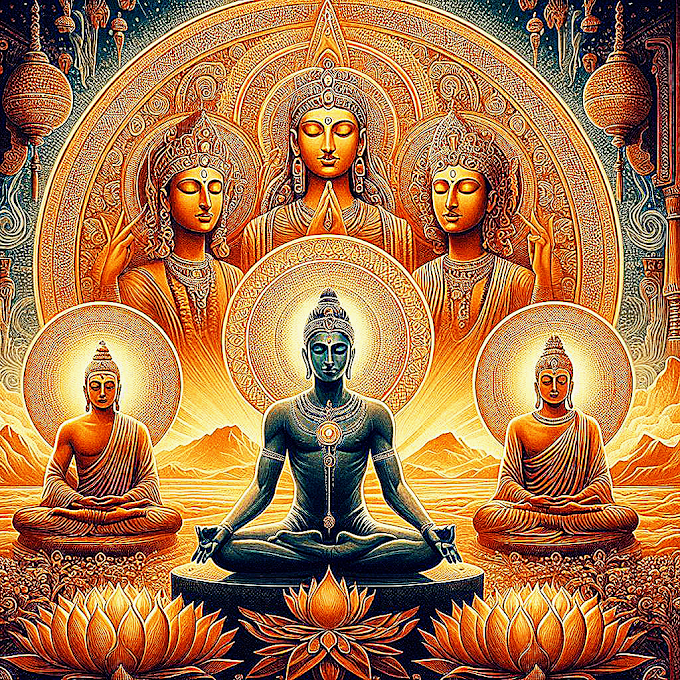
Discover key philosophical contexts of Hatha Yoga applications—uniting body, breath, and mind for holistic spiritual growth.
 |
| Key Philosophical Contexts of Hatha Yoga Applications |
Hatha Yoga does not arise in philosophical isolation. It stands at a unique crossroads where metaphysics becomes physiology, and liberation is pursued through disciplined embodiment. Rather than proposing a new philosophy, Hatha Yoga functions as an applied spiritual science, translating abstract doctrines from Indian philosophical systems into practical, lived experience.
Sāṃkhya Philosophy: Dualism as the Metaphysical Foundation of Hatha Yoga
A. Core Contribution of Sāṃkhya to Indian Yogic Thought
Among the six classical systems of Indian philosophy, Sāṃkhya occupies a uniquely foundational position for Yoga traditions. It provides a systematic ontology and cosmology that explains the structure of reality, the nature of bondage, and the means of liberation. Unlike devotional or ritualistic systems, Sāṃkhya is analytical and experiential, making it especially compatible with yogic discipline.
At its core, Sāṃkhya posits a radical dualism between two eternal realities:
Puruṣa – pure consciousness, the seer (draṣṭā), changeless, inactive, and luminous
Prakṛti – primordial nature, dynamic, unconscious, and the source of all material and mental phenomena
All experience arises due to the proximity of Puruṣa and Prakṛti, much like a crystal appearing colored when placed near an object. Bondage occurs not because Puruṣa acts, but because consciousness mistakenly identifies with the activities of Prakṛti.
This metaphysical insight becomes the philosophical bedrock upon which Yoga—especially Hatha Yoga—builds its practical methodology.
B. Sāṃkhya Cosmology and the Body–Mind Complex
Sāṃkhya elaborates Prakṛti into twenty-four tattvas, beginning from the unmanifest (avyakta) to the gross elements (mahābhūtas). These include:
Buddhi (intellect)
Ahaṃkāra (ego principle)
Manas (mind)
Indriyas (sensory and motor faculties)
Tanmatras and elements
From a yogic perspective, the body–mind complex is thus a layered expression of Prakṛti. Hatha Yoga accepts this framework and extends it by emphasizing that each layer of Prakṛti is not merely conceptual but physiologically embodied—in muscles, breath, nerves, and subtle energy channels.
Therefore, bondage is not only cognitive but somatic and energetic.
C. Relevance of Sāṃkhya to Hatha Yoga Practice
Hatha Yoga therefore complements Sāṃkhya by asserting that:
Mental clarity depends on prāṇic balance
Prāṇic balance depends on bodily purification
Bodily stability is essential for sustained discrimination
Thus, Hatha Yoga transforms Sāṃkhya’s metaphysics into a practical psycho-physiological discipline.
D. Asana: Refinement of the Gross Expression of Prakṛti
In Sāṃkhya terms, the physical body is the grossest manifestation of Prakṛti. Hatha Yoga employs āsana to directly address this level.
The objectives of āsana, seen through a Sāṃkhyan lens, include:
Reducing tamasic inertia (laziness, dullness)
Stabilizing rajasic agitation (restlessness, tension)
Cultivating sattvic steadiness (balance, clarity)
By stabilizing the body, āsana withdraws excessive identification from gross sensory stimuli. This creates the first experiential distance between the seer (Puruṣa) and the seen (body as Prakṛti).
Thus, āsana is not merely physical exercise—it is ontological training in non-identification.
E. Prāṇāyāma: Regulation of the Dynamic Force of Prakṛti
Sāṃkhya identifies motion and activity as intrinsic to Prakṛti. In the human system, this activity expresses itself most immediately as prāṇa.
Hatha Yoga’s emphasis on prāṇāyāma reflects a deep Sāṃkhyan insight:
When the movement of Prakṛti is restrained, consciousness naturally reveals itself.
Prāṇāyāma serves to:
Reduce rajas by slowing breath rhythms
Dissolve tamas by improving vitality
Promote sattva by creating internal harmony
As prāṇa becomes subtle and regulated, the mind (manas)—itself a product of Prakṛti—also becomes quiet. This validates the Sāṃkhyan assertion that mental fluctuations are not inherent to Puruṣa but belong to Prakṛti alone.
F. Mudras and Bandhas: Arresting the Dissipative Nature of Prakṛti
One of Hatha Yoga’s unique contributions beyond classical Sāṃkhya is its sophisticated use of mudrā and bandha. These techniques directly engage the dissipative tendencies of Prakṛti, especially the outward flow of energy.
From a Sāṃkhyan standpoint:
Prakṛti is constantly dispersing itself outward
Liberation requires involution, not further evolution
Mudrās and bandhas:
Redirect energy inward
Prevent prāṇic leakage
Stabilize the upward movement toward suṣumṇā
This physiological restraint mirrors the philosophical cessation of identification, allowing Puruṣa to remain as a detached witness.
G. Liberation Reinterpreted Through Hatha Yoga
In classical Sāṃkhya, liberation (kaivalya) occurs when Puruṣa realizes its complete distinction from Prakṛti. Hatha Yoga accepts this goal but redefines the path.
Liberation, in Hatha Yoga, is not achieved merely by conceptual insight but by:
Exhausting the functional expressions of Prakṛti
Rendering the body transparent
Stillifying prāṇa
Silencing mental modification
When Prakṛti becomes functionally quiescent, discrimination (viveka) arises effortlessly, not as an act of thinking but as a state of being.
Thus, liberation becomes embodied discernment, not abstract philosophy.
H. Experiential Dualism Leading to Transcendence
Although rooted in dualism, Hatha Yoga ultimately leads to a transcendent stillness where the distinction between knower and known no longer binds. The dualism of Sāṃkhya is therefore methodological, not finalistic.
Hatha Yoga uses dualistic analysis to:
Separate consciousness from materiality
Stabilize awareness in the witness position
Allow natural cessation of Prakṛti’s activity
In this state, Puruṣa does not “do” liberation—it simply abides as itself.
Sāṃkhya philosophy provides Hatha Yoga with its metaphysical clarity, explaining what bondage is and why liberation is possible. Hatha Yoga, in turn, provides Sāṃkhya with its practical embodiment, demonstrating how this liberation can be lived through the body, breath, and energy system.
Yoga of Patañjali: Ethical and Meditative Continuity
Core Contribution of Patañjali’s Yoga System
The Yoga Darśana of Patañjali presents one of the most refined psychological and spiritual systems in Indian philosophy. Its central thesis is encapsulated in the famous definition:
This concise aphorism reveals Yoga not as belief or ritual, but as a methodical science of mind transformation. Patañjali views human suffering as arising from uncontrolled mental modifications (vṛttis), which distort perception and bind consciousness to misidentification with prakṛti. Liberation, therefore, depends on restoring the mind to a state of clarity and stillness in which puruṣa abides in its own nature.
To achieve this, Patañjali outlines an integrated path consisting of:
Ethical discipline (Yama–Niyama)
Psychophysical preparation (Āsana–Prāṇāyāma)
Sensory mastery (Pratyāhāra)
Meditative absorption (Dhāraṇā–Dhyāna–Samādhi)
Although later traditions often highlight meditation alone, Patañjali clearly emphasizes that ethical purification and disciplined living are non-negotiable foundations for meditative success.
Ethical Discipline as the Ground of Meditation
In the Yoga Sūtras, yama and niyama are not moral commandments imposed externally but psychological restraints and observances that stabilize the mind and social relationships. Non-violence, truthfulness, moderation, purity, contentment, and self-study reduce internal conflict and emotional turbulence.
Without this ethical grounding:
Meditation becomes unstable
Concentration is repeatedly disrupted by guilt, fear, or desire
Spiritual experiences remain fragmented
Thus, ethical discipline ensures inner coherence, making sustained meditation possible rather than sporadic.
Meditative Absorption and the Inner Continuum
Patañjali defines meditation not as imagination or contemplation but as a progressive interiorization of awareness. The three higher limbs—dhāraṇā, dhyāna, and samādhi—form a seamless continuum culminating in samyama, the integrated power of insight.
Here, the goal is not trance or altered states but direct cognition (prajñā), where reality is perceived without conceptual distortion. However, Patañjali subtly acknowledges a challenge: even with ethical discipline and intellectual understanding, the mind remains deeply influenced by prāṇic instability.
This is where Haṭha Yoga enters the yogic landscape as a necessary and practical refinement.
Relevance to Haṭha Yoga: Refinement, Not Rejection
Hatha Yoga as a Functional Precursor to Rāja Yoga
Haṭha Yoga does not contradict Patañjali’s system; rather, it completes its practical dimension. Classical Haṭha texts repeatedly affirm that the ultimate aim is samādhi, identical to that of Rāja Yoga. However, Haṭha Yoga introduces a crucial experiential insight:
The mind cannot be mastered directly if prāṇa is unstable.
Where Patañjali presents a top-down psychological model, Haṭha Yoga offers a bottom-up psychophysiological strategy, recognizing the deep interdependence of body, breath, energy, and mind.
Prāṇa as the Missing Link in Mental Stillness
Haṭha Yoga asserts that mental fluctuations are not merely cognitive phenomena but are driven by irregular prāṇic movement. Restless breath produces restless thought; stabilized breath produces mental stillness.
Thus:
Prāṇāyāma becomes the primary tool for citta-nirodha
Regulation of inhalation, exhalation, and retention directly calms the nervous system
Prolonged kumbhaka naturally suspends thought without force
This insight explains why ethical intention alone often fails to produce lasting meditative depth—the energetic substrate remains untrained.
Role of Bandhas: Intelligent Energy Regulation
Bandhas represent one of Haṭha Yoga’s most significant contributions. Rather than suppressing the mind, they reorganize prāṇa:
Mūla Bandha stabilizes apāna and removes fear and insecurity
Uḍḍiyāna Bandha lifts prāṇa upward, enhancing clarity and alertness
Jālandhara Bandha regulates cerebral pressure and mental agitation
Together, they create energetic equilibrium, making sustained meditation physiologically possible.
Āsana as Fulfillment of Sthira–Sukha
Patañjali defines āsana succinctly as “sthira-sukham”—steady and comfortable. Haṭha Yoga operationalizes this definition through systematic posture training:
Strengthens the spine and postural muscles
Conditions the nervous system for stillness
Eliminates bodily discomfort that disrupts meditation
Thus, Haṭha Yoga does not reinterpret Patañjali’s concept of āsana—it embodies it.
Bridging Ethics and Absorption
Haṭha Yoga acts as a bridge between ethical aspiration and meditative capacity:
Ethics purify intention
Āsana stabilizes the body
Prāṇāyāma calms the breath
Bandhas regulate energy
Meditation unfolds naturally
Without this bridge, practitioners often oscillate between moral effort and fleeting concentration. With it, samādhi becomes sustainable rather than accidental.
Neuro-energetic Preparedness for Samādhi
One of Haṭha Yoga’s implicit contributions is its understanding of the nervous and subtle systems. By gradually conditioning these systems:
The brain becomes tolerant of prolonged stillness
Sensory withdrawal occurs spontaneously
Awareness stabilizes without strain
This explains why Haṭha Yoga insists on preparation and warns against premature meditation—the instrument must be refined before the music can flow.
The relationship between Patañjali’s Yoga and Haṭha Yoga is best understood as continuity rather than contradiction:
Patañjali provides the philosophical and ethical framework
Haṭha Yoga supplies the practical psychophysical technology
Together, they form a complete yogic science—one addressing consciousness through ethics and insight, the other through body, breath, and energy.
Haṭha Yoga does not replace Rāja Yoga; it prepares the practitioner to live it fully, ensuring that meditative absorption is not merely a momentary experience but a stable realization rooted in a disciplined body–mind system.
Advaita Vedanta: From Technique to Non-Dual Realization
Core Contribution of Advaita Vedanta
Advaita Vedanta represents the culminating metaphysical vision of Indian philosophical thought. Its central proclamation is radical in its simplicity and depth:
Reality is non-dual: Brahman alone is real (brahma satyam).
The individual self (ātman) is identical with Brahman.
Bondage is not real; it is a superimposition caused by ignorance (avidyā).
Liberation (mokṣa) is not an achievement or movement but direct recognition of one’s true nature.
From the Advaitic standpoint, suffering does not arise from the body, mind, or world themselves, but from mistaken identification with them. Ignorance creates the illusion of limitation, agency, and separateness. When ignorance is removed through knowledge (jñāna), freedom is revealed as ever-present.
This philosophical orientation profoundly influences the later interpretation of yogic systems, including Hatha Yoga.
Relevance of Advaita Vedanta to Hatha Yoga
From Dualistic Discipline to Non-Dual Insight
Early Hatha Yoga texts are primarily pragmatic and experiential, focusing on bodily purification, prāṇic regulation, and stabilization of consciousness. Their language often reflects a functional dualism—working with body, breath, mind, and energy as distinct components.
However, as Hatha Yoga evolved within broader Vedantic and Tantric environments, many lineages began to reinterpret its methods through an Advaitic lens. In this later synthesis:
Practices are no longer ends in themselves.
Techniques are understood as means to remove ignorance, not to attain a new state.
The body–mind is refined not to transcend reality, but to recognize reality already present.
Thus, Hatha Yoga becomes a methodological bridge between embodied discipline and non-dual realization.
Kundalinī Reinterpreted Through Advaita
Not an Event, but a Recognition
In popular interpretations, Kundalinī awakening is often described as a dramatic event—an ascent of energy that produces extraordinary experiences or powers. Advaita Vedanta reframes this entirely.
From a non-dual perspective:
Kundalinī is not something to be created or awakened
Consciousness is already whole, complete, and self-luminous
What is called “awakening” is the removal of obscurations that veil this truth
The ascent of prāṇa through the Suṣumṇā Nāḍī is thus understood symbolically and experientially as:
Withdrawal of awareness from fragmented identification
Dissolution of habitual body–mind conditioning
Progressive quieting of dualistic perception
Rather than producing mystical power, this ascent culminates in the collapse of the seeker–sought duality.
Prāṇa, Suṣumṇā, and Identity Dissolution
Energetics as Pedagogy, Not Ontology
In Advaita-influenced Hatha Yoga:
Prāṇa is not ultimate reality
Nāḍīs and cakras are not metaphysical absolutes
They function as pedagogical tools—maps for guiding awareness inward
As prāṇa stabilizes in Suṣumṇā:
Mental fluctuations subside
Sensory extroversion diminishes
Ego-based self-referencing weakens
This inner stillness creates the conditions for ātma-jñāna—direct self-knowledge.
Crucially, Advaita asserts that:
Liberation does not occur because prāṇa rises;prāṇa appears to rise because identification with limitation dissolves.
Thus, energetic phenomena are secondary indicators, not causes, of realization.
Jīvanmukti and the Embodied Sage
Liberation While Living
One of the strongest points of convergence between Advaita Vedanta and later Hatha Yoga is the doctrine of jīvanmukti—liberation while embodied.
Advaita Vedanta insists that:
Freedom does not require death
The body can continue functioning after realization
The liberated one remains established in non-dual awareness even amidst activity
Certain Hatha lineages adopt this view fully, emphasizing that:
The perfected body (siddha-deha) is not an immortal object
It is a transparent instrument, free from compulsive identification
The yogi lives in the world without being psychologically bound by it
This resolves a major philosophical tension: liberation is not escape from embodiment but freedom within embodiment.
Hatha Yoga as Purification of Avidyā in the Body–Mind
Ignorance Is Not Only Intellectual
Advaita Vedanta traditionally emphasizes ignorance (avidyā) as a cognitive error. Hatha Yoga contributes a crucial insight:
Ignorance is also somatically and energetically embedded
Conditioning is stored in posture, breath, nervous system, and reflexive patterns
Intellectual understanding alone may not dissolve deep-rooted identification
From this integrated view:
Āsana purifies habitual tension and self-image
Prāṇāyāma refines reactive emotional patterns
Mudrā and bandha interrupt unconscious identification with bodily processes
Meditation stabilizes the recognition of witnessing awareness
Hatha Yoga thus prepares the ground for spontaneous non-dual recognition by clearing embodied resistance.
Technique Transcended by Insight
The Paradox of Practice
Advaita Vedanta introduces a fundamental paradox into yogic practice:
Practice is necessary as long as ignorance appears to exist
Yet realization reveals that nothing was ever lacking
Later Hatha texts reflect this paradox subtly:
Practices are emphasized initially
Gradually, effort gives way to effortless abiding
Ultimately, technique dissolves into natural awareness
In this sense, Hatha Yoga is not contradicted by Advaita—it is fulfilled by it.
Philosophical Integration: Yoga and Vedanta Reconciled
Advaita Vedanta resolves key philosophical tensions within yogic systems:
| Yogic Concern | Advaitic Resolution |
|---|---|
| Liberation as attainment | Liberation as recognition |
| Energy ascent as goal | Energy refinement as preparation |
| Body as obstacle | Body as pedagogical field |
| Practice-based effort | Insight-based freedom |
This synthesis allows Hatha Yoga to be understood not as a separate path, but as a supportive discipline within a non-dual framework.
From an Advaita Vedantic standpoint, Hatha Yoga is neither rejected nor absolutized. It is honored as a skillful means—a preparatory discipline that refines the body–mind so that truth may reveal itself unobstructed.
In this integrated vision:
Nothing new is achieved
Nothing essential is transformed
What dissolves is ignorance
What remains is Brahman, recognized as one’s own Self
Thus, Hatha Yoga evolves—from technique to transparency, from effort to insight, and from dualistic striving to non-dual realization.
Shaiva Tantra: The Living Heart of Hatha Yoga
Shaiva Tantra is not a peripheral influence on Hatha Yoga; it is its living philosophical and experiential core. Hatha Yoga emerges historically and conceptually from Shaiva-Tantric milieus where liberation was pursued not by rejecting the body, but by transfiguring it into a vehicle of awakening. This radical revaluation of embodiment marks a decisive shift in Indian spiritual thought.
Core Contribution of Shaiva Tantra
1. Shiva as Pure Consciousness (Cit, Chaitanya)
In Shaiva Tantra, Shiva is not merely a deity but the absolute principle of consciousness—formless, motionless, self-luminous, and eternal. Shiva represents:
Pure awareness without attributes
The witnessing consciousness beyond mind and matter
The unchanging substratum of all experience
This understanding aligns with the yogic goal of abidance in the seer, but Shaiva Tantra reframes this goal as union rather than isolation.
2. Shakti as Dynamic Power Within the Body
Shakti, inseparable from Shiva, is the creative, kinetic energy that manifests as:
Body, breath, and mind
Sensory perception and mental activity
The entire cosmos, from gross matter to subtle vibration
In the human being, Shakti is not abstract—it is biologically and energetically present as prana and Kundalini. Bondage arises when Shakti becomes fragmented, dispersed, and outward-flowing. Liberation arises when Shakti returns to Shiva, its source.
3. Liberation Through Conscious Union (Śiva–Śakti Saṃyoga)
Unlike purely dualistic systems, Shaiva Tantra defines liberation as the reunion of Shiva and Shakti within the practitioner:
Shiva without Shakti is inert
Shakti without Shiva is blind activity
Hatha Yoga operationalizes this doctrine by using the body as the field of reunion, making metaphysical union an embodied reality rather than a conceptual abstraction.
Relevance to Hatha Yoga
1. Tantric Orientation with Ascetic Discipline
Hatha Yoga is Tantric in essence but ascetic in method. It inherits Tantra’s sacred view of the body while rejecting external ritual excess. Instead, it internalizes Tantra through disciplined practice:
External fire rituals become internal pranic heat (tapas)
Mantras become regulated breath and inner sound
Temples become the spinal axis and heart center
This synthesis allows Hatha Yoga to preserve Tantric depth while maintaining yogic restraint.
2. Kundalini Shakti: Latent Power of Awakening
A central Tantric teaching absorbed by Hatha Yoga is Kundalini Shakti, described as:
Dormant, coiled power at the base of the spine
The evolutionary force of consciousness
The individual expression of cosmic Shakti
Hatha Yoga practices—especially pranayama, mudras, and bandhas—are designed to awaken, stabilize, and guide this energy upward through the central channel. Awakening is not emotional or visionary alone; it is systematic, physiological, and progressive.
3. Chakras as Psycho-Energetic Centers
Shaiva Tantra introduces the chakra system not as symbolic imagination, but as functional centers of consciousness:
Each chakra corresponds to specific psychological, physiological, and spiritual functions
Obstructions in chakras manifest as emotional patterns, compulsions, or mental instability
Ascending through chakras represents the refinement of awareness
Hatha Yoga uses posture, breath, and locks to activate, purify, and harmonize these centers, allowing consciousness to ascend without fragmentation.
4. Mantra, Mudra, and Bandha as Transformative Tools
Shaiva Tantra emphasizes direct transformation, not moral suppression. Hatha Yoga inherits three key Tantric instruments:
Mantra: internalized as subtle sound (nāda), vibration, and rhythmic breath
Mudra: psycho-neuromuscular seals that redirect energy and consciousness
Bandha: energetic locks that prevent pranic dissipation and force upward movement
These are not symbolic gestures but technologies of consciousness, acting simultaneously on nervous system, endocrine flow, and awareness.
The Body as Sacred Reality
1. Body as Kṣetra (Sacred Field)
Shaiva Tantra declares the body to be a kṣetra—a sacred field where liberation unfolds. Every aspect of the body has spiritual significance:
Spine as Mount Meru
Breath as cosmic wind (vāyu)
Blood and semen as lunar essence (bindu)
Hatha Yoga adopts this sacred physiology, treating the body as worthy of reverence, precision, and care.
2. Body as Microcosmic Temple
Rather than worshipping external idols, Shaiva Tantra teaches antar-yāga (inner worship). Hatha Yoga continues this by:
Installing awareness at the heart and crown
Purifying inner channels instead of pilgrimage routes
Offering breath and attention instead of flowers
The yogi becomes both priest and shrine, and practice becomes continuous worship.
A Radical Departure from Renunciatory Negation
Earlier renunciatory traditions often viewed the body as:
A source of impurity
A distraction from liberation
Something to be abandoned
Shaiva Tantra—and Hatha Yoga through it—reverses this view:
That which binds, when known and mastered, liberates.
The same body that anchors consciousness to limitation becomes the vehicle of transcendence when awakened correctly. This is one of the most revolutionary contributions of Shaiva Tantra to Indian spirituality.
Shaiva Tantra is the living heart of Hatha Yoga because it provides:
The metaphysical vision (Shiva–Shakti non-duality)
The energetic map (chakras, nadis, Kundalini)
The sacred valuation of embodiment
Hatha Yoga transforms these Tantric insights into a systematic yogic discipline, allowing liberation to be realized not in spite of the body, but through it.
In this vision, the body is no longer a prison of the soul—it is the altar of awakening.
Ayurveda: Somatic Health as Spiritual Infrastructure
A. Core Contribution of Ayurveda to Yogic Sādhanā
Ayurveda, the ancient Indian science of life (āyus), provides the biological and physiological foundation upon which yogic practice safely rests. While Yoga addresses liberation of consciousness, Ayurveda ensures the sustainability of the embodied seeker. In this sense, Ayurveda does not compete with Yoga but completes it, functioning as the somatic intelligence that protects the aspirant from imbalance.
Ayurveda conceptualizes health as a dynamic equilibrium among four primary factors:
Doṣas – Vāta (movement), Pitta (transformation), Kapha (structure)
Agni – the digestive and metabolic fire governing assimilation
Dhātus – bodily tissues responsible for strength, immunity, and vitality
Srotas – channels that transport nutrients, waste, and prāṇa
Together, these form a living infrastructure that supports not only physical survival but higher yogic transformation.
B. The Yogic Body as an Ayurvedic System
Hatha Yoga inherits Ayurveda’s understanding that the body is not a mechanical object, but a fluid, intelligent system governed by rhythmic balance. Yogic texts consistently emphasize that spiritual failure often arises not from lack of devotion, but from physiological imbalance.
From an Ayurvedic perspective:
Vāta imbalance leads to anxiety, tremors, irregular breath, and unstable meditation
Pitta imbalance manifests as aggression, overheating, excessive ambition, and psychic irritability
Kapha imbalance results in lethargy, dullness, heaviness, and spiritual stagnation
Hatha Yoga practices are therefore calibrated interventions, not generic techniques. Their effectiveness depends on the biological state of the practitioner, a principle deeply rooted in Ayurvedic diagnostics.
C. Agni: The Hidden Axis of Yogic Progress
Among all Ayurvedic principles, Agni holds a central place in yogic success. Digestion is not merely a physical process—it is the gateway through which prāṇa enters the system.
When Agni is weak:
Nutrients are poorly assimilated
Toxins (āma) accumulate
Nadīs become obstructed
Prāṇa flows irregularly
Hatha Yoga’s insistence on light, moderate, and sattvic diet directly reflects this understanding. A weak digestive fire makes:
Prāṇāyāma hazardous, causing dizziness or nervous imbalance
Meditation unstable, leading to dullness or agitation
Kundalinī practices dangerous, amplifying toxins rather than awareness
Thus, strengthening Agni is not preparatory—it is foundational.
D. Śatkarma: Ayurvedic Cleansing for Yogic Readiness
Hatha Yoga adopts Ayurveda’s purification logic through śatkarmas (six cleansing actions). These are not spiritual shortcuts but therapeutic resets designed to restore balance before advanced practices.
Each śatkarma targets specific Ayurvedic dysfunctions:
Neti clears Kapha accumulation in the head and sinuses
Dhauti improves gastric function and metabolic clarity
Basti balances Vāta in the colon, stabilizing prāṇa
Nauli rekindles Agni and massages abdominal organs
Without such cleansing, advanced yogic techniques merely push prāṇa through obstructed channels, intensifying imbalance rather than awakening.
Ayurveda thus ensures that the field of practice is fertile before seeds are sown.
E. Dhātus and Ojas: The Longevity of the Yogi
Ayurveda emphasizes that spiritual life is not a short-term pursuit but a lifelong discipline. This requires robust dhātu health, especially the refinement of ojas—the subtle essence of all tissues.
In yogic terms:
Strong dhātus support long sitting, breath retention, and fasting
Adequate ojas provides mental calm, immunity, and emotional resilience
Depleted ojas leads to burnout, nervous collapse, or spiritual disillusionment
Hatha Yoga’s moderation, rest, and nourishment guidelines reflect a deep concern for ojas preservation. Excessive austerity, though praised superficially, is considered counterproductive if it weakens the body’s subtle reserves.
Thus, Ayurveda safeguards the yogi against self-destructive zeal.
F. Srotas and Nāḍīs: Biological and Subtle Channel Parallels
Ayurveda’s concept of srotas (channels) finds a direct parallel in Hatha Yoga’s nāḍī system. Both traditions agree that health depends on unobstructed flow.
When srotas are blocked:
Digestion falters
Circulation becomes erratic
Prāṇa stagnates
Hatha Yoga extends this principle into the subtle realm, teaching that:
Nāḍī purity is essential for prāṇāyāma
Suṣumṇā activation requires prior cleansing
Energy forced through impure channels causes disease or delusion
Ayurveda therefore provides the physiological logic behind yogic warnings against premature or excessive practice.
G. Preventing Spiritual Pathologies
One of Ayurveda’s most important contributions to Hatha Yoga is its preventive wisdom. It recognizes that spiritual practices amplify existing tendencies.
Without somatic harmony:
Prāṇāyāma becomes dangerous, overstimulating Vāta
Meditation becomes agitating, inflaming Pitta
Kundalinī activation becomes destabilizing, magnifying latent imbalances
Many yogic “failures” are in fact biological miscalculations, not spiritual shortcomings. Ayurveda protects the sādhaka by ensuring that transformation occurs gradually, sustainably, and intelligently.
H. Ayurveda as the Ethical Dimension of the Body
Beyond therapy, Ayurveda instills a moral relationship with the body. The body is not an obstacle to transcendence but a sacred instrument.
Hatha Yoga adopts this ethic by:
Encouraging compassion toward bodily limits
Rejecting violent austerities
Promoting harmony over conquest
The body, when respected, becomes a stable vessel for higher consciousness rather than a battlefield.
Ayurveda provides the biological wisdom that undergirds Hatha Yoga’s spiritual ambition. It ensures that transformation does not come at the cost of health, and awakening does not result in collapse.
By balancing doṣas, strengthening Agni, refining dhātus, and purifying srotas, Ayurveda constructs the somatic infrastructure upon which prāṇa can ascend safely and consciousness can rest steadily.
Integrative Vision: Body–Breath–Mind as One Continuum
At the heart of Haṭha Yoga lies a profound integrative insight shared across multiple Indian philosophical systems—Yoga, Sāṃkhya, Tantra, Śaivism, and Vedānta:
Consciousness does not operate in isolation; it expresses itself through body, breath, and mind as a single, indivisible continuum.
This vision stands in contrast to approaches that treat the body as a hindrance, the breath as secondary, or the mind as an independent entity. Haṭha Yoga recognizes that human experience is layered but unified, and transformation must therefore occur across all layers simultaneously.
Body as an Instrument of Consciousness
Contrary to extreme ascetic traditions that regard the body as an obstacle to liberation, Haṭha Yoga adopts a radically different stance:
The body is not the problem; unrefined embodiment is.
The physical body (sthūla śarīra) is seen as the gateway to subtler dimensions of existence. Rather than rejecting it, Haṭha Yoga disciplines and purifies the body so it may serve as a stable foundation for higher awareness.
This instrumental view of the body includes:
Strengthening the spine as the central axis of consciousness
Removing blockages that disturb prāṇic flow
Cultivating stillness and endurance necessary for prolonged meditation
Thus, āsana is not mere physical exercise but somatic preparation for inner absorption. A body that trembles, aches, or fatigues easily cannot sustain deep contemplative states.
Breath as the Bridge Between Body and Mind
Among all yogic discoveries, perhaps the most revolutionary is the recognition that breath is the functional bridge between physiology and psychology.
Haṭha Yoga repeatedly emphasizes that:
Irregular breath produces restless thought
Stabilized breath naturally calms the mind
Suspended breath leads toward suspension of mental activity
This understanding transforms prāṇāyāma into the central technology of consciousness regulation.
Unlike purely intellectual methods of meditation that attempt to “control the mind” directly, Haṭha Yoga works indirectly but effectively—by regulating prāṇa, the vital force that animates both body and mind.
Key insights include:
The mind follows prāṇa like a shadow
Thought waves arise from prāṇic disturbances
Still prāṇa leads to still citta
In this framework, breath is neither mechanical nor symbolic; it is causal.
Mind as an Energetic Phenomenon
One of Haṭha Yoga’s most subtle contributions is its view of the mind not merely as a cognitive faculty, but as an energetic process.
While Patañjali describes mental fluctuations (vṛttis) as psychological modifications, Haṭha Yoga explains their energetic origin:
Desire, fear, memory, and imagination are fueled by prāṇa
Samskāras are stored not only mentally but energetically
Ego persists due to habitual prāṇic patterns
Therefore, the dissolution of the mind is not achieved through repression or analysis, but through energetic refinement.
This explains the centrality of:
Bandhas, which reorganize prāṇic currents
Mudrās, which seal and redirect subtle energy
Kumbhaka, which temporarily suspends mental activity
The mind dissolves not because it is attacked, but because its fuel is refined.
Subtle Body as the Field of Transformation
Haṭha Yoga situates its practices within a sophisticated model of subtle anatomy, consisting of:
Nāḍīs (energy channels)
Cakras (psycho-energetic centers)
Kuṇḍalinī (latent spiritual potential)
These are not metaphysical speculations but functional maps explaining how inner transformation unfolds.
In this model:
Purification of nāḍīs allows prāṇa to flow freely
Balanced prāṇa stabilizes the mind
Awakened kuṇḍalinī leads consciousness inward and upward
Thus, meditation becomes not an isolated mental act, but the culmination of an embodied energetic process.
Neither Ascetic Nor Merely Therapeutic
Haṭha Yoga occupies a unique philosophical position. It is:
Not purely ascetic, because it does not reject the body or the world
Not merely therapeutic, because health is not its final goal
Instead, it represents a form of embodied soteriology—liberation achieved through disciplined engagement with embodiment.
Health, longevity, vitality, and emotional balance are not ends in themselves; they are by-products of preparing the instrument of realization.
This avoids two extremes:
Spiritual bypassing, where the body is ignored
Reductionism, where yoga is reduced to wellness techniques
Haṭha Yoga insists that liberation must pass through embodiment, not around it.
Integration of Philosophical Systems
What unites diverse Indian systems within Haṭha Yoga is this integrative vision:
Sāṃkhya provides the metaphysical distinction between puruṣa and prakṛti
Yoga Darśana offers psychological discipline and samādhi
Tantra contributes subtle body science and kuṇḍalinī mechanics
Śaivism emphasizes Śiva–Śakti unity
Vedānta affirms liberation as self-realization
Haṭha Yoga synthesizes these into a practical methodology, making abstract philosophy experientially accessible.
From Fragmentation to Continuum Awareness
Ordinary human experience is fragmented:
Body acts without awareness
Breath moves unconsciously
Mind reacts compulsively
Haṭha Yoga reverses this fragmentation by cultivating continuum awareness, where:
The body becomes conscious
The breath becomes intentional
The mind becomes transparent
In this integrated state, meditation is no longer an effort—it becomes a natural consequence of internal harmony.
The integrative vision of Haṭha Yoga reveals a fundamental truth:
Consciousness liberates itself not by escaping the body, but by fully inhabiting it.
By treating the body as an instrument, breath as a lever, and mind as an energetic process, Haṭha Yoga offers one of the most complete spiritual technologies ever developed.
It teaches that liberation is not an abstract ideal but a lived, embodied reality, arising when body, breath, and mind function as one uninterrupted continuum—silent, luminous, and free.
Conclusion: Hatha Yoga as Applied Indian Philosophy
Hatha Yoga is best understood as:
The practical convergence of Indian philosophical wisdom
A system where metaphysics becomes method
A path where liberation is cultivated from the ground up
By integrating:
Sāṃkhya’s discrimination
Yoga’s discipline
Vedanta’s non-duality
Tantra’s sacred embodiment
Ayurveda’s holistic health
Hatha Yoga offers a complete roadmap for spiritual evolution, honoring the body not as a limitation, but as the very gateway to transcendence.
References
Chauhan, D. & Bansal, M. (2024). Bridging Traditions and Trends: Indian Knowledge Systems and Yoga. Sirjana Journal.
Singleton, M. (2010). Yoga Body: The Origins of Modern Posture Practice. Oxford University Press.
Bhide, S. R., & Bhargav, H. (2023). Exploring the Therapeutic Potential of Yoga Philosophy. Indian Journal of Psychological Medicine.
FAQ
What philosophical foundation supports Hatha Yoga applications?
They are rooted in Indian traditions of Tantra, Vedanta, and Patanjali’s Yoga Sutras.
How does Hatha Yoga embody the concept of duality?
It balances sun (ha) and moon (tha), symbolizing harmony of opposing energies.
What role does the body play in Hatha Yoga philosophy?
The body is seen as a sacred vessel for spiritual transformation and liberation.
How does Hatha Yoga connect with the idea of prana?
Breath practices regulate life force, aligning physical and mental energies.
What ethical principles guide Hatha Yoga applications?
Discipline, non‑violence, and self‑control form its philosophical and practical foundation.
How does Hatha Yoga relate to moksha in Indian philosophy?
It prepares practitioners for liberation by purifying body, mind, and consciousness.
What is the ultimate philosophical aim of Hatha Yoga?
Integration of body, breath, and mind to achieve union with the divine.


.png)