.png)
Explore the origin of Hatha Yoga in Indian traditional texts—its roots, practices, and role in spiritual discipline.
.png) |
| Origin of Hatha Yoga According to Indian Traditional Texts |
The Meaning and Symbolism of Hatha Yoga
Hatha Yoga (हठ योग) is a composite of two Sanskrit terms:
"Ha" (ह) = Sun (symbolizing prana, vitality, masculine energy, Pingala Nadi)
- "Tha" (ठ) = Moon (symbolizing mental calmness, feminine energy, Ida Nadi)Thus, Hatha Yoga represents the union and balance of solar and lunar energies within the human system.
Foundational Texts of Hatha Yoga and Its Historical Roots
Hatha Yoga did not emerge as a fragmented system of physical postures but as a systematic, spiritual–scientific discipline rooted in India’s tantric and yogic traditions. Its foundations lie in classical texts that clearly define its purpose, methods, and ultimate goal. These texts demonstrate that Hatha Yoga was never intended as mere physical fitness, but as a direct pathway to higher states of consciousness.
A. Hatha Yoga Pradipika (15th Century CE)
The Hatha Yoga Pradipika is the cornerstone of classical Hatha Yoga literature. Swatmarama presents Hatha Yoga not as an independent system but as a means to Raja Yoga, emphasizing mastery of the body and breath to prepare the mind for meditation and Samadhi.
Philosophical Orientation
In its opening verses, Swatmarama explicitly states that Hatha Yoga is offered to those unable to directly enter Raja Yoga due to physical, energetic, or mental obstacles. Thus, Hatha Yoga functions as a practical ladder, making higher yogic states accessible to householders and seekers alike.
Key Verses and Interpretation
This establishes two critical ideas:
Hatha Yoga belongs to a living lineage, not a modern invention.
Its ultimate destination is Raja Yoga, meaning meditation, absorption, and liberation.
This verse is often misunderstood as purely therapeutic. In classical interpretation, “suffering” includes:
Physical disease
Energetic imbalance (pranic blockages)
Mental agitation and ignorance
Thus, Hatha Yoga is presented as a corrective science addressing the entire human system.
Practices Outlined
The Pradipika systematically presents:
Asana: To stabilize the body and remove disease
Shatkarma: To purify internal systems
Pranayama: To control prana and quiet the mind
Mudra & Bandha: To awaken and seal energy
Nadanusandhana: Inner sound meditation leading to absorption
Importantly, asana is only one limb, and not the final goal.
B. Gheranda Samhita (17th Century CE)
The Gheranda Samhita presents Hatha Yoga through the framework of Ghata Yoga, where ghata (the pot) symbolizes the human body as a vessel for transformation.
Unique Contribution
Unlike Patanjali’s eightfold path or Swatmarama’s gradual ascent, Gheranda introduces a seven-limbed system that prioritizes physical purification before subtle practices.
Verse 1.10 – The Seven Limbs
Shatkarma – Internal cleansing
Asana – Strength, steadiness, and comfort
Mudra – Sealing and directing pranic energy
Pratyahara – Withdrawal of senses
Pranayama – Regulation of life force
Dhyana – Meditation
Samadhi – Absorption and liberation
This structure makes it unmistakably clear that asana is preparatory, not central.
Philosophical Insight
The Gheranda Samhita views liberation as impossible without physical and energetic purity. The body is not rejected but refined, aligning with tantric philosophy where the body becomes a tool for transcendence, not an obstacle.
This text also democratizes yoga by asserting that ordinary individuals, not just ascetics, can attain spiritual realization through disciplined practice.
C. Shiva Samhita (14th–17th Century CE)
The Shiva Samhita is the most philosophically and energetically sophisticated of the three texts. It integrates Hatha Yoga with Advaita Vedanta and Tantra, making it a bridge between physical practice and metaphysical realization.
Key Teaching – Verse 3.14
“Even the weak, diseased, or aged can attain success through Yoga if practiced with perseverance.”
This verse radically shifts yoga away from elitism. Success is not dependent on:
Physical perfection
Youth
Ascetic renunciation
Instead, it depends on consistent, intelligent practice.
Subtle Body Doctrine
The Shiva Samhita provides extensive insight into:
Nadis (energy channels) – especially Ida, Pingala, and Sushumna
Chakras – as centers of consciousness
Kundalini Shakti – latent spiritual energy
Here, Hatha Yoga becomes a science of internal alchemy, transforming gross bodily functions into refined awareness.
Integration with Tantra
Unlike purely ascetic systems, the Shiva Samhita embraces life, pleasure, and worldly engagement—when aligned with yogic awareness. This reinforces the idea that Hatha Yoga is life-affirming, not escapist.
Comparative Insight: What These Texts Collectively Reveal
Across all three texts, several truths emerge clearly:
- Hatha Yoga is preparatory, not inferiorIt prepares the practitioner for Raja Yoga and Samadhi.
- The body is central, not secondaryIt is purified, strengthened, and transformed—not ignored.
- Energy regulation is essentialPrana, nadis, chakras, and Kundalini are core components.
- Yoga is accessible to allAge, disease, or social status are not barriers.
- Asana is only one componentWithout pranayama, mudra, and meditation, the system remains incomplete.
The foundational texts of Hatha Yoga clearly demonstrate that it is a complete spiritual science, integrating:
Physical discipline
Energetic mastery
Mental purification
Meditative absorption
Modern interpretations that reduce Hatha Yoga to stretching or fitness strip it of its original depth and purpose. The classical texts remind us that Hatha Yoga is not about achieving postures, but about preparing the human system for liberation.
Mythological and Tantric Roots of Hatha Yoga
Hatha Yoga does not emerge merely as a physical discipline but as a Tantric–yogic transmission rooted in mythology, oral lineage, and esoteric practice. Its foundations are inseparable from Shaiva Tantra, where the body is viewed not as an obstacle but as a sacred instrument for liberation. The mythological narratives surrounding Hatha Yoga are not symbolic stories alone; they encode methodologies, initiatory authority, and spiritual legitimacy.
1. Shiva as Adiyogi – The Primordial Source
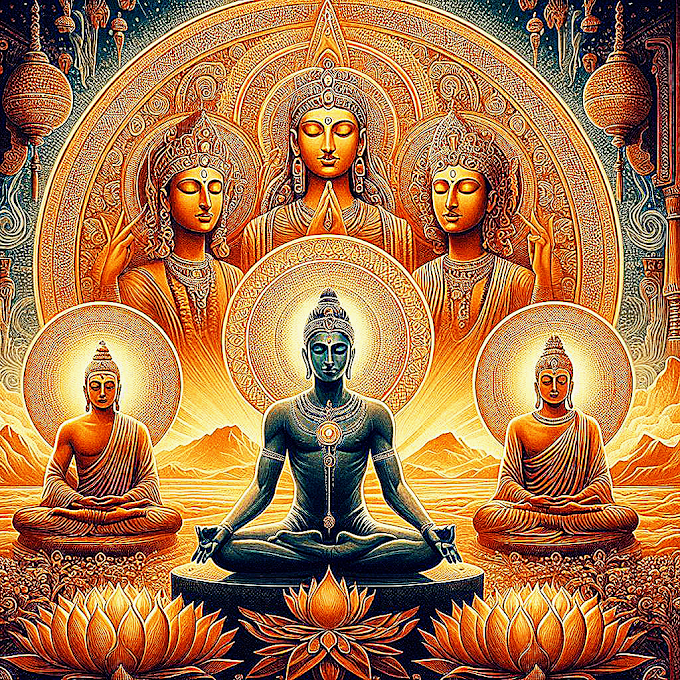
In yogic cosmology, Shiva is revered as Adiyogi, the first yogi and original guru of all yogic knowledge. Unlike later philosophical systems that emphasize renunciation of the body, Shiva’s teachings affirm the body as a vessel of awakening.
Shiva’s yogic posture in iconography—seated in deep meditation, adorned with serpents, ash, and rudraksha—symbolizes mastery over prana, death, and sensory attachment.
The stillness of Shiva represents perfect union of Hatha (sun–moon energies), not brute physical force.
Hatha Yoga, in this context, is understood as a preparatory yet powerful system designed to make the body capable of sustaining higher states of consciousness.
The transmission of yogic knowledge by Shiva is portrayed as direct revelation (divya jnana) rather than intellectual theory. This sets Hatha Yoga apart as a lived experiential science rather than speculative philosophy.
2. Matsyendranath – The Receiver of the Secret Doctrine
The myth of Matsyendranath receiving yogic knowledge from Shiva is central to the Tantric understanding of Hatha Yoga.
According to tradition:
Shiva was teaching secret yogic techniques to Parvati in solitude.
Matsyendranath, in the form of a fish (matsya), overheard these teachings.
Shiva, recognizing his readiness, initiated him into the yogic path.
This narrative conveys crucial yogic principles:
Yoga knowledge is not publicly taught; it is revealed to the prepared seeker.
True transmission happens through direct experience and initiation, not mere study.
Hatha Yoga is classified as rahasya vidya (secret knowledge), meant to be practiced under guidance.
Matsyendranath thus becomes the first human guru in the Nath lineage and a bridge between divine knowledge and human practice.
3. Gorakhnath – The Systematizer of Hatha Yoga
While Matsyendranath is the transmitter, Gorakhnath is the great systematizer and codifier of Hatha Yoga.
Gorakhnath’s contribution lies in:
Transforming esoteric Tantric rituals into practical, disciplined yogic methods.
Emphasizing internal alchemy—the transformation of bodily energies into spiritual realization.
Establishing yogic discipline that was accessible to ascetics beyond caste, ritual hierarchy, or temple-based worship.
Gorakhnath’s teachings focus on:
Mastery of prana through pranayama
Control of bindu (vital essence)
Awakening of Kundalini through mudra and bandha
Stabilization of the body as a vajra-deha (adamantine body)
He redefined the yogi not as a ritual priest or philosopher, but as a direct experiential adept.
4. Nath Sampradaya – Living Lineage of Hatha Yoga
The Nath Sampradaya is not merely a philosophical school but a living ascetic tradition that preserved Hatha Yoga through rigorous discipline.
Key features of Nath practice:
Renunciation of social identity in favor of yogic identity
Guru–shishya transmission as the only valid authority
Integration of asana, pranayama, mudra, bandha, and meditation
Emphasis on kaya sadhana (body-based spiritual practice)
For the Nath yogis:
The body is not illusory; it is a laboratory for liberation.
Liberation (moksha) is achievable within the body, not after death.
Hatha Yoga is the foundation upon which Raja Yoga (meditative absorption) rests.
Their ascetic lifestyle ensured that Hatha Yoga survived outside institutionalized religion, maintaining its raw, experiential essence.
5. Goraksha Shataka – The Proto-Hatha Text
Among early yogic texts, Goraksha Shataka occupies a unique and often overlooked position. It predates later compilations and provides a systematic exposition of Hatha Yoga principles.
Key themes emphasized:
Purification of nadis as a prerequisite for spiritual progress
Regulation of breath to control the mind
Awakening of Kundalini through internal discipline
Necessity of guru guidance for safe and effective practice
Unlike later texts that compile multiple techniques, this work reflects a focused, practitioner-oriented manual, emphasizing depth over breadth.
Its importance lies in:
Establishing Hatha Yoga as a complete sadhana, not preparatory gymnastics
Laying the philosophical groundwork later expanded in classical texts
Demonstrating that Hatha Yoga evolved from Tantric discipline, not physical culture
6. Tantric Worldview Behind Hatha Yoga
The Tantric philosophy underpinning Hatha Yoga differs significantly from later dualistic or renunciate traditions:
Body and consciousness are not separate.
Liberation is achieved by mastering energy, not rejecting matter.
The sun (ha) and moon (tha) symbolize pingala and ida nadis, whose balance leads to awakening.
Hatha Yoga techniques are thus:
Energetic operations
Psycho-physiological refinements
Preparatory stages for samadhi
This worldview explains why Hatha Yoga places such emphasis on bandhas, mudras, breath retention, and internal awareness.
7. Why These Roots Matter Today
Understanding the mythological and Tantric roots of Hatha Yoga corrects modern misconceptions:
Hatha Yoga is not exercise, but embodied spiritual science.
Asanas are tools for energetic stability, not aesthetic display.
Pranayama and mudras are central, not optional.
The guru–disciple relationship is essential for advanced practice.
Without this context, modern yoga risks becoming disconnected from its original transformative purpose.
The mythological and Tantric origins of Hatha Yoga reveal it as a lineage-based, experiential discipline transmitted from Shiva to Matsyendranath, refined by Gorakhnath, and preserved by the Nath Sampradaya.
Texts like Goraksha Shataka demonstrate that Hatha Yoga was never a secondary or inferior path—it was designed as a direct means to liberation through the body.
To practice Hatha Yoga authentically is to engage in:
Discipline of the body
Mastery of breath and energy
Stabilization of the mind
Preparation for the highest meditative states
It is not merely a method—it is a sacred science of inner alchemy.
Purpose of Hatha Yoga According to Traditional Texts
Hatha Yoga, as described in classical yogic literature, is not a standalone system aimed merely at physical health or flexibility. Instead, it is a systematic preparatory science designed to purify, stabilize, and refine the human body–mind complex so that higher spiritual practices can unfold naturally. Traditional texts consistently emphasize that the ultimate purpose of Hatha Yoga is inner transformation leading toward liberation (moksha).
Energetic Purification: Preparing the Subtle Body
One of the primary purposes of Hatha Yoga in traditional texts is energetic purification. The human system is understood to be governed not only by muscles and organs but by a subtle energetic network composed of nadis (energy channels), prana (life force), and chakras (psycho-energetic centers).
According to classical understanding:
The body is unfit for higher yogic practices when the nadis are blocked.
Irregular pranic flow leads to mental instability, emotional disturbance, and physical disease.
Energetic imbalance prevents sustained meditation and inner absorption.
Hatha Yoga addresses this through a progressive methodology:
a) Purification of Nadis
Traditional texts state that pranayama, kriyas, and bandhas cleanse the subtle channels, allowing prana to flow freely. This purification leads to:
Lightness and stability of the body
Improved respiratory and metabolic efficiency
Increased capacity for breath retention and subtle awareness
b) Regulation of Prana
Breath control is not merely physiological; it is a tool for regulating the nervous system and mind. When prana becomes steady:
Mental fluctuations reduce
Emotional extremes balance out
Awareness becomes inwardly focused
Thus, energetic purification is not cosmetic or therapeutic alone, but foundational for spiritual progress.
Making the Body a Fit Vessel (Yogya Sharira)
Traditional texts repeatedly emphasize that the body must become strong, stable, and disease-free before higher yogic states can be sustained.
The purpose of asana in Hatha Yoga is:
To remove bodily rigidity and discomfort
To develop steadiness (sthira) and ease (sukha)
To allow prolonged sitting without distraction
A body plagued by pain, weakness, or restlessness becomes an obstacle to meditation. Hatha Yoga therefore refines the body into a supportive instrument rather than a hindrance.
This transformation results in:
Improved postural integrity
Harmonized musculoskeletal and nervous systems
Enhanced tolerance for stillness
The body becomes transparent to awareness, no longer demanding constant attention.
Harmonizing Body, Breath, and Mind
Another central purpose of Hatha Yoga is integration. Traditional yoga never treats the body, breath, and mind as separate entities.
Through coordinated practices:
Asana stabilizes the physical body
Pranayama stabilizes pranic flow
Bandhas and mudras unify upward and downward energies
The mind gradually becomes calm and focused
This integration creates a psycho-energetic equilibrium, essential for deeper meditative states.
Without this harmony:
Meditation remains effortful
The mind oscillates between dullness and agitation
Inner awareness lacks depth and continuity
Thus, Hatha Yoga creates the inner conditions necessary for effortless meditation.
Awakening Latent Spiritual Energy
Traditional texts describe Hatha Yoga as a means to awaken dormant spiritual potential, often symbolized as Kundalini Shakti.
However, awakening is not forced. Instead:
Energetic purification prepares the channels
Balanced prana allows safe upward movement of energy
Bandhas regulate pressure and flow
The purpose here is not dramatic experiences but expanded awareness and clarity. As energy ascends:
Sensory distractions reduce
Intuition sharpens
Inner silence deepens
This gradual awakening supports the transition toward meditative absorption rather than sensory indulgence.
Hatha Yoga as the Gateway to Raja Yoga
Classical texts clearly state that Hatha Yoga is not the final goal. It is a means to Raja Yoga, the royal path of meditation, mastery of the mind, and realization of the Self.
Why Preparation is Necessary
Raja Yoga demands:
A steady, pain-free posture
A calm, regulated breath
A focused and disciplined mind
Without Hatha Yoga:
Sitting meditation becomes uncomfortable
Breath remains irregular
The mind resists sustained concentration
Thus, Hatha Yoga removes obstacles that would otherwise hinder Raja Yoga practice.
Stabilizing the Mind for Higher Awareness
One of the subtle yet profound purposes of Hatha Yoga is mental purification.
As prana stabilizes:
Thought patterns slow down
Emotional reactivity diminishes
Awareness becomes more refined
The practitioner experiences:
Increased clarity
Reduced identification with thoughts
Enhanced witness consciousness
This mental steadiness forms the foundation for dharana (concentration) and dhyana (meditation).
Preparing for Samadhi and Liberation
Ultimately, traditional texts position Hatha Yoga as a direct support for Samadhi, the state of complete inner absorption.
Through systematic purification:
The body no longer distracts
The breath becomes subtle
The mind enters effortless stillness
When these conditions mature, Raja Yoga unfolds naturally, leading toward:
Self-realization
Freedom from mental suffering
Liberation from cyclical bondage
Hatha Yoga does not grant liberation by itself, but makes liberation possible.
Summary: The True Purpose of Hatha Yoga
According to traditional texts, the purpose of Hatha Yoga is:
Purification of pranic channels
Stabilization and refinement of the body
Harmonization of energy and mind
Preparation for meditation
Entry into Raja Yoga
Support for Samadhi and liberation
It is not fitness yoga, nor merely therapeutic. It is a precise spiritual science, designed to transform the human system into a fit vessel for higher consciousness.
Conclusion
The origin of Hatha Yoga, according to Indian traditional texts, lies in the Tantric and Nath traditions, with Shiva as the original teacher and Matsyendranath as the first human disciple. The practice aims to purify the body, balance energies, and lead to higher states of consciousness, culminating in Samadhi.
Primary References:
Haṭha Yoga Pradīpikā – Svātmārāma (15th c.) – Systematic presentation of Haṭha Yoga and its lineage.
Śiva Saṁhitā – Presents Haṭha Yoga as a divine teaching from Śiva.
Gheraṇḍa Saṁhitā – Describes Haṭha Yoga as a sevenfold yogic path.
Yoga Yājñavalkya – Early yogic practices influencing Haṭha traditions.
Amṛtasiddhi (11th c.) – One of the earliest texts influencing Haṭha Yoga methods.
Śvetāśvatara Upaniṣad – Early yogic techniques and ascetic discipline.
Kaṭha Upaniṣad – Proto-yogic concepts influencing later Haṭha Yoga.
Maitrī Upaniṣad – Early references to breath control and meditation.
Tantric Texts (e.g., Kubjikāmatatantra) – Roots of Haṭha techniques in Tantra.
Vyāsa Bhāṣya – Philosophical groundwork for later Haṭha synthesis.
Nātha Yogī Texts (e.g., Gorakṣaśataka) – Central to Haṭha Yoga origins.
Gorakṣa Saṁhitā – Nātha tradition teachings on Haṭha Yoga.
FAQ
Q1. Which text is written on hatha yoga?
Ans: The most authoritative text on Hatha Yoga is the Hatha Yoga Pradipika, written by Swami Swatmarama in the 15th century. Other classical texts include the Gheranda Samhita and Shiva Samhita, which also elaborate on Hatha Yoga practices.
Q2. What are the origins of hatha yoga?
Ans: Hatha Yoga originated in India between the 9th and 15th centuries, drawing from tantric and ascetic traditions. Its practices were systematized in texts like the Hatha Yoga Pradipika, aiming to purify the body and mind for higher meditation and spiritual realization.
Q3. What was the first text in which yoga was mentioned?
Ans: The earliest mention of yoga is found in the Rig Veda (c. 1500–1200 BCE), where it appears in hymns as a practice of discipline and union. Later, the Upanishads and Bhagavad Gita expanded its philosophical meaning, shaping yoga into a spiritual path.
Q4. What is the origin of Hatha Yoga Pradipika?
Ans: The Hatha Yoga Pradipika originated in 15th‑century India, compiled by Swami Swatmarama from earlier yogic and tantric traditions. It systematized diverse practices—postures, breath control, and energy locks—into a unified manual, becoming the foundational text of Hatha Yoga.
Q5. Who is called the father of Hatha Yoga?
Ans: Swami Swatmarama is called the father of Hatha Yoga, as he compiled the Hatha Yoga Pradipika in the 15th century. His work organized earlier yogic practices into a systematic guide, establishing the foundation of Hatha Yoga tradition.
Q6. Who introduced hatha yoga in India?
Ans: Hatha Yoga was introduced in India by yogis drawing from tantric and ascetic traditions between the 9th and 15th centuries. Swami Swatmarama later systematized these practices in the Hatha Yoga Pradipika, making him a key figure in its formal introduction.
Q7. What is the original Hatha Yoga Pradipika?
Ans: The original Hatha Yoga Pradipika is a 15th‑century Sanskrit text compiled by Swami Swatmarama. It systematizes earlier yogic practices—postures, breath control, mudras, and meditation—into a foundational manual of Hatha Yoga.


.png)