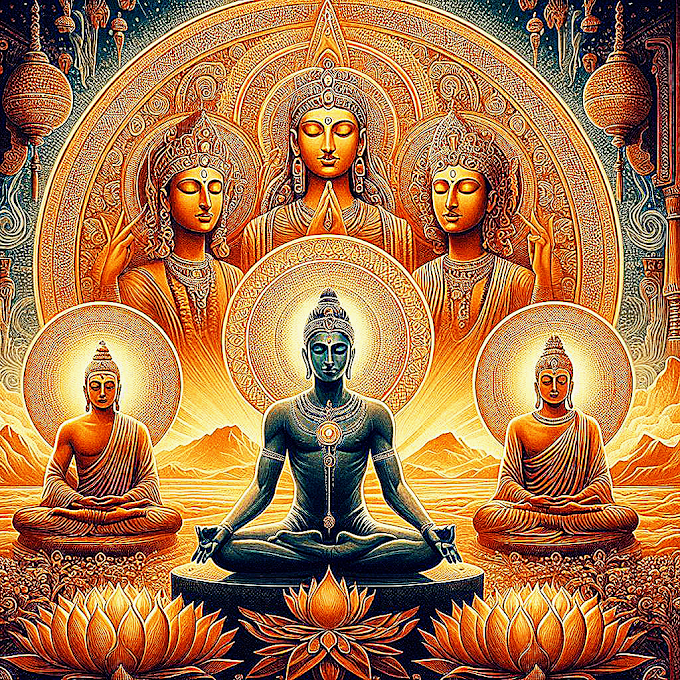
.png)
Discover Padmasana (Lotus Pose) with steps, benefits, and precautions in this complete yoga guide for meditation and balance.
 |
| Padmasana (Lotus Pose) – A Complete Guide |
Padmasana (पद्मासन), or Lotus Pose, is a classic seated yoga posture that promotes meditation, stability, and inner peace. It is one of the most recognized cross-legged postures in yoga, often associated with deep concentration, energy balance, and spiritual awakening. Practiced in Hatha, Ashtanga, and Raja Yoga, Padmasana is highly beneficial for calming the mind, improving posture, and enhancing flexibility.
Meaning & Etymology
Sanskrit Name: पद्मासन (Padmāsana)
Meaning:
Padma = Lotus
Asana = Posture or Pose
The name represents the lotus flower, symbolizing purity, enlightenment, and spiritual growth. Just as the lotus blooms in muddy water, this pose signifies rising above distractions to attain inner peace.
🔹 Reference: Hatha Yoga Pradipika (Chapter 1, Verse 49) states that Padmasana is one of the most important asanas for meditation and pranayama, as it promotes stability and mental focus.
How to Perform Padmasana (Lotus Pose)
Padmasana is one of the most classical meditative postures, designed to create maximum stability with minimal muscular effort. It establishes a steady base for dhyana (meditation), pranayama, and mantra practice, while aligning the body for prolonged sitting with alert relaxation.
Step-by-Step Instructions (Expanded & Refined)
1. Establish the Foundation – Dandasana
Sit on the floor with legs extended straight forward.
Ground both sitting bones evenly into the floor.
Lengthen the spine upward, lifting through the crown of the head.
Keep the chest open and shoulders relaxed.
If the pelvis tilts backward or the lower back rounds, sit on a folded blanket or cushion to elevate the hips and support a neutral spine.
2. Prepare the Hips & Knees
Gently rotate the thighs outward from the hip joints.
Relax the knees and ankles before entering the posture.
Avoid rushing—Padmasana requires open hips, not forced knees.
This preparation protects the knee ligaments and ensures safe entry.
3. Bend the First Knee & Place the Foot
Bend the right knee and lift the foot using both hands.
Place the right foot on the left thigh, close to the abdomen.
Turn the sole upward, with the heel near the lower abdomen.
Allow the knee to descend naturally toward the floor.
The movement should originate from the hip joint, not the knee.
4. Bend the Second Knee & Complete the Lotus
Bend the left knee and carefully place the left foot on the right thigh.
Both feet should rest symmetrically on the opposite thighs.
Heels remain close to the lower abdomen, soles facing upward.
Knees ideally rest on the floor or move toward it comfortably.
If the knees remain elevated, do not force them down.
5. Align the Pelvis & Spine
Sit tall with the pelvis neutral and stable.
Lengthen the spine evenly from base to crown.
Maintain the natural curves of the spine without stiffness.
Avoid leaning forward or backward.
Spinal alignment ensures uninterrupted breath flow and mental alertness.
6. Hand Placement & Mudra
Rest the hands gently on the knees.
Use Chin Mudra or Jnana Mudra (thumb and index finger touching).
Alternatively, place the hands in Dhyana Mudra for meditation.
Keep the arms relaxed, elbows slightly bent.
Mudras help stabilize the mind and direct awareness inward.
7. Shoulder, Neck & Head Awareness
Relax the shoulders downward and backward.
Keep the neck long and aligned with the spine.
Slightly tuck the chin to maintain cervical balance.
Gaze softly forward or close the eyes.
This alignment prevents tension in the neck and upper back.
8. Breath Awareness & Meditative Holding
Breathe slowly and deeply through the nose.
Allow the breath to become rhythmic and effortless.
Observe inhalation and exhalation without control initially.
Hold Padmasana for 1–5 minutes, gradually increasing duration as comfort and stability develop.
9. Releasing the Pose Safely
Open the eyes slowly if closed.
Remove one foot at a time using the hands.
Extend both legs forward into Dandasana.
Gently shake or massage the legs to restore circulation.
Always release slowly to protect knees and ankles.
Key Alignment Guidelines
Hips: Open and relaxed; movement originates from hips
Knees: Passive and strain-free
Spine: Upright, elongated, and stable
Shoulders: Relaxed, chest open
Feet: Soles upward, heels close to abdomen
Modifications & Preparatory Support
Practice Ardha Padmasana (Half Lotus) with one foot on the thigh and the other leg extended or folded below.
Sit on a cushion to reduce knee strain.
Place folded blankets under knees for support.
Regularly practice hip-opening postures before attempting full Padmasana.
These adaptations allow gradual and safe progression.
Common Mistakes to Avoid
Forcing knees downward
Entering the pose without hip preparation
Slouching or over-stiffening the spine
Holding the breath
Ignoring pain or numbness
Therapeutic Awareness
Padmasana is particularly effective for:
Stabilizing the body for long meditation
Enhancing breath awareness
Encouraging stillness and sensory withdrawal
Supporting energy balance through spinal alignment
Discomfort in knees or ankles is a signal to modify or exit.
Yogic Perspective
Padmasana symbolizes purity, detachment, and spiritual awakening. Like the lotus rising from still water, the posture represents inner steadiness amid outer activity. When practiced with patience and awareness, Padmasana becomes a bridge between physical discipline and meditative absorption.
Padmasana is a deeply stabilizing and meditative posture that requires patience, anatomical awareness, and gradual conditioning. When practiced without force and with proper alignment, it supports long meditation, balanced breath, and mental clarity, making it one of the most profound seated asanas in yoga.
Benefits of Padmasana (Lotus Pose)
Padmasana is one of the most revered seated postures in yogic tradition. Beyond its visual symmetry, it is a powerful meditative seat designed to cultivate physical stability, mental stillness, and energetic alignment. Its benefits unfold simultaneously at the musculoskeletal, nervous, respiratory, and psycho-spiritual levels.
A. Physical Benefits
1. Improves Hip, Knee & Ankle Flexibility
Padmasana deeply engages:
Hip external rotators
Knee stabilizers
Ankle and foot joints
With consistent and mindful practice:
Hip joints gradually open
Knee mobility improves without strain
Ankle stiffness reduces
This flexibility is achieved progressively, making Padmasana a long-term joint-conditioning posture rather than a forceful stretch.
2. Strengthens the Spine, Back & Core Muscles
Although seated, Padmasana is an active posture. Maintaining an upright torso strengthens:
Erector spinae muscles
Deep core stabilizers
Pelvic support muscles
This strength:
Prevents spinal collapse
Reduces lower back fatigue
Enhances endurance for long sitting sessions
It trains the spine to remain tall with minimal muscular effort.
3. Enhances Posture & Spinal Alignment
Padmasana naturally promotes:
Neutral pelvic positioning
Balanced spinal curves
Symmetry between left and right sides
Over time, this postural re-education:
Corrects habitual slouching
Improves shoulder alignment
Supports cervical and lumbar health
Good posture in Padmasana often translates into better posture in daily life.
4. Aids Digestion & Improves Circulation
The stable seated position gently stimulates:
Abdominal organs
Pelvic circulation
Venous return from the lower limbs
Benefits include:
Improved digestive efficiency
Reduced bloating
Better circulation in the pelvic and abdominal region
The crossed-leg position also encourages grounding and stability, aiding internal organ function.
B. Mental & Emotional Benefits
1. Promotes Calmness & Emotional Stability
Padmasana creates a stable physical base, which sends calming signals to the nervous system. This leads to:
Reduced mental restlessness
Emotional steadiness
Lower stress reactivity
The stillness of the body naturally invites stillness of the mind.
2. Enhances Focus, Concentration & Mindfulness
The symmetrical alignment of Padmasana minimizes physical distractions, allowing:
Sustained attention
Sharper concentration
Enhanced awareness of breath and sensations
This makes it ideal for:
Meditation
Breath awareness practices
Mantra repetition
3. Helps Reduce Stress & Anxiety
Padmasana supports activation of the parasympathetic nervous system, which:
Slows the heart rate
Deepens breathing
Calms mental fluctuations
As the nervous system settles, feelings of anxiety and mental overload gradually diminish.
C. Therapeutic Benefits
1. Supports Meditation & Deep Breathing Practices
Padmasana is traditionally recommended for:
Dhyana (meditation)
Pranayama
Japa (mantra practice)
The locked leg position:
Creates a firm base
Prevents postural shifts
Allows the spine to act as a stable axis
This stability enables long, uninterrupted meditative sitting.
2. Beneficial for Mild Back Pain & Stress-Related Disorders
When practiced with proper alignment and support:
It reduces muscular tension in the back
Encourages spinal elongation
Promotes mental relaxation
It is particularly helpful for individuals whose back discomfort is linked to poor posture or stress rather than structural injury.
3. Improves Respiratory Efficiency
An erect spine in Padmasana allows:
Full expansion of the lungs
Free movement of the diaphragm
Deeper, slower breathing
This enhances:
Oxygen intake
Breath control
Lung capacity
Making it highly suitable for advanced breathing practices.
D. Energetic & Subtle Benefits
1. Stimulates the Root & Sacral Energy Centers
Padmasana creates pressure and awareness in the pelvic region, which:
Grounds the body
Stabilizes energy flow
Enhances vitality
This grounding effect supports inner stability and emotional balance.
2. Facilitates Upward Flow of Awareness
With the lower body firmly anchored, attention naturally moves upward:
Toward the spine
Toward breath awareness
Toward mental stillness
This upward movement supports higher states of awareness during meditation.
E. Neurological & Psychophysiological Effects
Reduces sensory distractions by immobilizing the lower body
Encourages synchronized brain-wave patterns associated with calm alertness
Improves mind–body coordination
These effects make Padmasana a bridge between physical posture and mental discipline.
F. Yogic & Philosophical Perspective
Classical yogic teachings emphasize that an asana should be:
Steady (Sthira)
Comfortable (Sukham)
Padmasana embodies this principle by:
Offering firmness without rigidity
Comfort without collapse
Stillness without dullness
It demonstrates that true stability arises from balance, not force.
G. Long-Term Practice Benefits
Regular, mindful practice of Padmasana leads to:
Improved sitting tolerance
Enhanced meditative depth
Greater emotional resilience
Heightened self-awareness
It becomes not just a posture, but a state of poised presence.
Padmasana is far more than a seated pose—it is a complete meditative architecture. By aligning the body, calming the mind, and stabilizing internal energy, it creates ideal conditions for deep awareness and inner silence. Practiced patiently and progressively, Padmasana transforms sitting into a powerful tool for physical health, mental clarity, and inner balance.
Precautions & Contraindications of Padmasana (Lotus Pose)
Padmasana is one of the most revered seated postures in yogic tradition, symbolizing stability, meditative absorption, and inner balance. However, despite its calm appearance, Padmasana places significant rotational demand on the hips, knees, ankles, and connective tissues. Practicing without proper preparation or anatomical awareness can lead to strain or long-term joint issues. Therefore, understanding precautions and safe modifications is essential.
A. Major Contraindications (Avoid or Modify)
1. Severe Knee Injuries or Pain
Padmasana requires deep external rotation at the hip, not the knee. When hip mobility is insufficient, rotational force is often transferred to the knee joint, which can cause:
Ligament strain (especially MCL and meniscus)
Chronic knee pain
Joint inflammation
Avoid Padmasana if you have:
Meniscus tears
Ligament injuries
Chronic knee instability
Safe Alternatives:
Ardha Padmasana
Sukhasana with support
Vajrasana (if knees allow)
2. Ankle Injuries or Restricted Ankle Mobility
The ankles in Padmasana are placed in sustained plantar flexion and compression. This may aggravate:
Ankle stiffness
Previous sprains
Tendon inflammation
Precautionary Measures:
Avoid placing pressure directly on sensitive ankle bones
Use padding under the ankles
Reduce holding time
3. Hip Injuries or Structural Limitations
Padmasana demands deep external rotation and flexion of the hip joints. Individuals with:
Hip arthritis
Labral tears
Structural hip limitations
may experience discomfort or compensatory strain.
Modifications:
Elevate hips with cushions
Practice preparatory hip-opening postures
Choose cross-legged alternatives
4. Recent Leg Surgery or Joint Recovery
Post-surgical tissues are vulnerable to stress and overstretching.
Avoid Padmasana if you are recovering from:
Knee replacement or arthroscopy
Hip surgery
Ankle reconstruction
Only resume after professional clearance and gradual rehabilitation.
5. Sciatica or Nerve Sensitivity
Padmasana can compress the sciatic nerve if hip flexibility is insufficient or if pelvic alignment is compromised.
Signs to watch for:
Tingling or numbness in legs
Shooting pain down the thigh
Loss of sensation
Recommended Approach:
Keep pelvis elevated
Avoid prolonged holds
Choose supported seated poses
6. Limited Lower-Body Flexibility
Forcing Padmasana before the body is ready can cause microtrauma in joints and connective tissues.
Key Principle:
Padmasana is a long-term outcome, not a beginner posture.
B. Alignment & Safety Principles
1. Hip-First Rotation
Rotation must originate from the hip joints
Knees should remain passive and relaxed
Never press the knees downward
2. Pelvic Stability
Sit evenly on both sitting bones
Avoid collapsing or tilting the pelvis
Elevation under hips improves alignment
3. Spine & Upper Body
Spine should be upright yet relaxed
Chest open without strain
Neck aligned over the shoulders
C. Tips for Beginners (Expanded)
1. Start with Ardha Padmasana (Half Lotus)
This reduces strain by placing only one foot on the opposite thigh while the other remains on the floor.
Benefits:
Gradual hip opening
Reduced knee pressure
Better balance
2. Use Support Generously
Sit on a folded blanket or bolster
Use knee support if legs float above the ground
Comfort allows longer, safer sitting
3. Avoid Forcing the Knees
Forcing the knees down is one of the most common causes of yoga-related knee injuries.
Instead:
Let gravity work naturally
Focus on relaxation
Progress slowly over months or years
4. Limit Duration Initially
Begin with 30–60 seconds
Increase only if no discomfort arises
Short, mindful practice is safer than long forced holds
5. Balance Both Sides
If practicing half-lotus, always switch legs to maintain symmetry and prevent imbalances.
D. Common Mistakes to Avoid
Pulling the feet aggressively into position
Using hands to push knees downward
Ignoring pain or numbness
Slouching the spine
Holding breath
Pain in Padmasana is a warning, not a sign of progress.
E. Therapeutic & Restorative Adaptations
1. Supported Padmasana
Bolster under hips
Blanket under knees
Allows meditative benefits without strain
2. Dynamic Preparation
Gentle hip rotations before sitting
Slow transitions in and out of the pose
Improves joint lubrication
3. Meditation Alternatives
If Padmasana is not accessible, meditative stability can be achieved in:
Siddhasana
Sukhasana
Chair sitting with upright spine
F. Mental & Energetic Considerations
Padmasana traditionally supports:
Mental steadiness
Nervous system calm
Sustained meditative awareness
However, discomfort or pain disrupts mental focus and contradicts yogic principles. True mastery lies in ease with awareness, not external form.
Padmasana is a profound yet demanding posture that must be approached with patience, anatomical intelligence, and respect for individual limitations. By honoring contraindications, using supportive modifications, and progressing gradually, practitioners can safely experience the deep physical stillness and meditative depth this posture offers. Padmasana is not about forcing the body into shape but about allowing the body to open in harmony with the breath and mind.
Variations & Advanced Practices of Padmasana
(Lotus Pose – Meditative Stability & Energetic Alignment)
Padmasana is revered as a supreme meditative posture in yogic tradition, valued for its ability to create unwavering stability, spinal alignment, and inward focus. While the full Lotus requires significant hip external rotation and knee integrity, its variations and advanced practices allow progressive conditioning, deeper energetic engagement, and refined meditative absorption. Practiced mindfully, these adaptations cultivate physical steadiness, neural calm, and heightened awareness.
5.1. Ardha Padmasana
(Half Lotus Pose – Progressive & Preparatory Form)
Description & Technique:
Ardha Padmasana places one foot on the opposite thigh while the other leg remains folded beneath or extended forward.
Sit upright with the spine neutral and sit bones grounded.
Place one foot high on the opposite thigh, sole facing upward.
Fold or extend the remaining leg comfortably.
Keep knees relaxed and pelvis level.
Anatomical & Biomechanical Effects:
Gradually conditions hip external rotators and flexors.
Maintains knee safety by reducing rotational demand.
Encourages symmetrical spinal alignment when alternated.
Neuromuscular & Postural Benefits:
Enhances proprioception in the hips and pelvis.
Improves postural endurance for seated practices.
Reduces asymmetrical loading through conscious alignment.
Advanced Refinements:
Alternate sides regularly to prevent imbalance.
Use gentle quadriceps engagement to stabilize the knee.
Sit on a folded support if the pelvis tilts backward.
5.2. Baddha Padmasana
(Bound Lotus Pose – Advanced Shoulder & Chest Integration)
Description & Technique:
Baddha Padmasana intensifies Padmasana by binding the arms behind the back.
Begin in stable Padmasana.
Reach one arm behind the back and clasp the opposite foot or wrist.
Repeat with the other arm.
Lift the chest while maintaining a neutral spine.
Anatomical & Structural Effects:
Deeply opens shoulders, chest, and upper spine.
Strengthens spinal extensors through upright engagement.
Enhances scapular retraction and shoulder mobility.
Physiological & Energetic Benefits:
Expands thoracic capacity, improving breath efficiency.
Encourages energetic containment and upward flow.
Builds steadiness and confidence through sustained holds.
Advanced Refinements:
Maintain soft elbows to avoid shoulder strain.
Keep neck long; avoid jutting the chin forward.
Hold for short durations initially (10–30 seconds).
5.3. Padmasana with Jnana Mudra
(Meditative Enhancement with Wisdom Seal)
Description & Technique:
Jnana Mudra is formed by touching the tip of the index finger to the thumb, palms facing upward.
Sit in Padmasana or a comfortable variation.
Rest hands on knees with Jnana Mudra.
Keep shoulders relaxed and spine upright.
Allow breath to become slow and subtle.
Neurological & Meditative Effects:
Enhances sensory integration and mental clarity.
Encourages focused attention and introspection.
Supports sustained meditative absorption.
Energetic Significance:
Symbolizes unity of individual awareness with universal intelligence.
Encourages subtle energy circulation through the upper body.
Stabilizes attention during prolonged meditation.
5.4. Supported Padmasana
(Alignment & Longevity Variation)
Description:
Use cushions under knees or thighs for support.
Sit on an elevated surface to reduce hip strain.
Benefits:
Protects knee and hip joints.
Enables longer meditative sessions.
Maintains structural integrity without force.
5.5. Dynamic Padmasana Transitions
(Mobility & Circulation Integration)
Technique:
Transition gently between Ardha Padmasana and neutral seated postures.
Synchronize movement with breath.
Benefits:
Improves hip joint circulation.
Reduces stiffness during long sitting sessions.
Maintains mobility without destabilizing meditation.
5.6. Padmasana with Pranayama Integration
Breath Practices:
Slow diaphragmatic breathing.
Gentle breath retention under guidance.
Benefits:
Deepens nervous system regulation.
Enhances oxygen efficiency and mental calm.
Prepares the mind for meditative stillness.
5.7. Endurance & Stillness Training
Technique:
Hold Padmasana or Ardha Padmasana for extended durations.
Maintain minimal muscular effort and steady awareness.
Benefits:
Builds physical and mental resilience.
Strengthens postural muscles subtly.
Cultivates equanimity and inner silence.
Key Safety & Alignment Considerations
Never force the knees into position; hip rotation precedes knee flexion.
Avoid Padmasana if knee pain or ligament strain is present.
Use preparatory hip-opening postures before attempting full Lotus.
Regular alternation of sides is essential in Half Lotus.
Advanced practices of Padmasana—including Ardha Padmasana, Baddha Padmasana, meditative refinement with Jnana Mudra, supported adaptations, dynamic transitions, and breath-centered endurance—transform Lotus Pose into a comprehensive system for physical stability, neural balance, and meditative depth. These variations honor anatomical safety while preserving the pose’s profound contemplative purpose. When approached progressively and mindfully, Padmasana becomes not merely a posture, but a gateway to sustained awareness, inner stillness, and disciplined presence.
Conclusion
Padmasana is a fundamental yoga posture that enhances stability, concentration, and inner peace. Regular practice improves flexibility, supports meditation, and promotes emotional balance. It is considered one of the best asanas for deepening spiritual awareness and achieving mental stillness.
Reference
Hatha Yoga Pradipika – Mentions Padmasana as one of the primary seated postures for meditation and pranayama.
Sanskrit Etymology – “Padma” = lotus, symbolizing purity and enlightenment; “Asana” = posture.
Traditional Practice – Revered in Hatha, Raja, and Buddhist traditions as a meditative seat promoting stability and inner peace.
B.K.S. Iyengar – Light on Yoga – Explains Padmasana as a foundation for pranayama and meditation, emphasizing alignment and discipline.
Swami Satyananda Saraswati – Asana Pranayama Mudra Bandha – Provides detailed steps, benefits, and therapeutic applications of Padmasana.
T.K.V. Desikachar – The Heart of Yoga – Highlights Padmasana’s role in cultivating breath awareness and concentration.
FAQ
Q1. What is the Lotus Pose (padmasana)?
Ans: Padmasana, or Lotus Pose, is a classical seated yoga posture where each foot is placed on the opposite thigh, forming a stable cross‑legged position. It is primarily used for meditation and pranayama, promoting physical stability, mental calmness, and deep concentration.
Q2. What is padmasana and its benefits?
Ans: Padmasana, or Lotus Pose, is a classical cross‑legged yoga posture where each foot rests on the opposite thigh, creating a stable seat for meditation. Its benefits include improved posture, enhanced concentration, reduced stress, and support for deeper breathing and relaxation.
Q3. How to do padmasana step by step?
Ans: Sit with your spine upright and legs extended; bend your right knee to place the foot on the left thigh (sole up, heel near the abdomen), then repeat with the left foot on the right thigh. Rest hands on knees, lengthen the spine, relax shoulders, keep both knees close to the floor, and breathe steadily without forcing.
Q4. Which disease is cured by Padmasana?
Ans: Padmasana (Lotus Pose) does not cure diseases directly but supports health by calming the mind and improving circulation. Regular practice may help reduce stress, ease digestive issues, and support management of conditions like anxiety and mild hypertension.
Q5. What are the side effects of Padmasana?
Ans: Padmasana may cause strain or discomfort in the knees, hips, and ankles if practiced without adequate flexibility. Forcing the posture can lead to joint injuries, so it should be avoided by those with existing lower‑body issues or practiced with modifications.


.png)