.png)
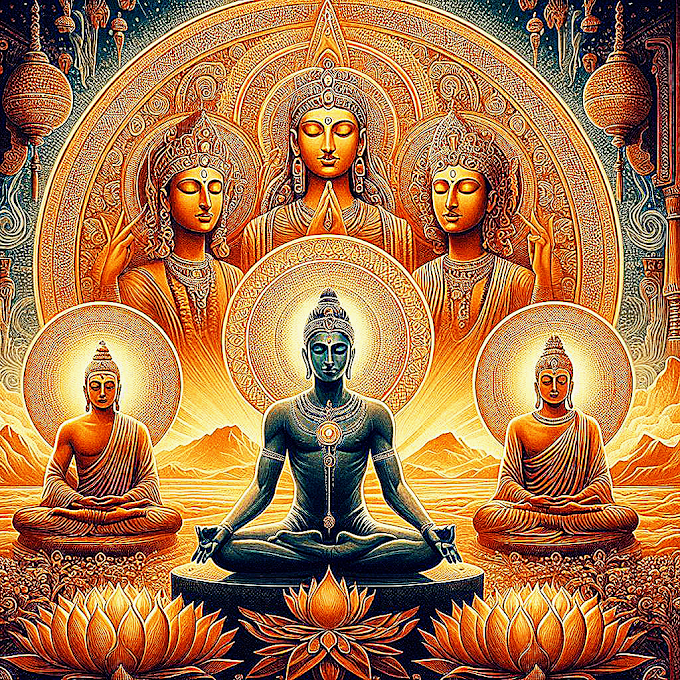
Discover Kriya Yoga through Samadhi & Sadhan Pada—pathways of discipline, meditation, and inner awakening.
 |
| Kriya Yoga According to the Samadhi and Sadhan Pada |
Kriya Yoga, as elaborated in the Yoga Sutras of Patanjali, is a practical path that encompasses mental discipline, detachment, and devotion. It bridges the physical, mental, and spiritual dimensions of human experience. The Samadhi Pada (Chapter 1) and Sadhan Pada (Chapter 2) of the Yoga Sutras provide essential insights into the practice and philosophy of Kriya Yoga, making it a profound system for self-transformation and enlightenment.
Definition of Kriya Yoga
In Sutra 2.1 (Sadhan Pada), Patanjali defines Kriya Yoga as:
Tapah-svadhyayeshvara-pranidhanani kriya-yogah.
This translates to:
- Tapah: Self-discipline or austerity.
- Svadhyaya: Self-study, including the study of sacred texts.
- Ishvarapranidhana: Devotion to the divine or surrender to a higher power.
Together, these practices aim to purify the mind, discipline the body, and prepare the practitioner for deeper meditation and spiritual growth.
Kriya Yoga in the Context of the Sādhana Pāda
The Sādhana Pāda of Patañjali’s Yoga Sūtras serves as the practical heart of the text, addressing the disciplined means (sādhana) by which the aspirant reduces suffering and progresses toward liberation (kaivalya). Early in this chapter, Patañjali introduces Kriyā Yoga as a concise yet powerful method for confronting the root causes of human distress—the kleśas—and preparing the mind for sustained meditation and samādhi. Unlike purely contemplative approaches, Kriyā Yoga is action-oriented, integrating disciplined effort, self-inquiry, and surrender to a higher principle.
Patañjali defines Kriyā Yoga in Sūtra 2.1 as consisting of Tapah (self-discipline), Svādhyāya (self-study), and Īśvarapraṇidhāna (surrender to the Divine). Vyāsa, in his Bhāṣya, clarifies that these three practices directly weaken the kleśas and cultivate inner purity, making them foundational for all subsequent yogic practices.
Purpose of Kriyā Yoga in the Sādhana Pāda
The primary aim of Kriyā Yoga is twofold:
Kleśa-tanūkaraṇa – the attenuation of the afflictions (avidyā, asmitā, rāga, dveṣa, abhiniveśa).
Samādhi-bhāvanārthaḥ – preparing the aspirant for meditative absorption.
Vyāsa emphasizes that without addressing these afflictions, higher yogic states remain unstable or inaccessible. Kriyā Yoga thus functions as a therapeutic and preparatory discipline, addressing psychological conditioning at its root.
1. Tapah (Self-Discipline)
Meaning and Scope
Tapah literally means “to heat” or “to burn.” In the yogic sense, it refers to voluntary, conscious effort undertaken to purify body, senses, and mind. Tapah is not self-punishment but intelligent discipline aimed at transformation. Vyāsa explains that tapah removes impurities (mala) and strengthens inner resolve.
Dimensions of Tapah
Tapah operates on multiple levels:
Physical Tapah: Regular practice of āsana and prāṇāyāma, maintaining bodily health and stability.
Mental Tapah: Cultivating attention, restraint over wandering thoughts, and perseverance in practice.
Emotional Tapah: Enduring discomfort, emotional reactions, and habitual patterns without escapism.
Practical Expressions
Consistent yogic routine despite fluctuations in motivation.
Moderation in food (mitāhāra), sleep, and sensory indulgence.
Willingness to face discomfort rather than seeking constant pleasure.
Philosophical Role
Tapah directly counters tamas (inertia) and rajas (restlessness), cultivating sattva (clarity). It weakens rāga and dveṣa by reducing dependency on pleasure and aversion to discomfort. Vyāsa notes that through tapah, latent impressions (saṁskāras) are gradually “burned,” allowing new, healthier patterns to emerge.
2. Svādhyāya (Self-Study)
Meaning and Intent
Svādhyāya combines sva (self) and adhyāya (study), indicating both scriptural study and introspective self-observation. It is the practice of turning awareness inward to understand one’s mental patterns, motivations, and conditioning.
Forms of Svādhyāya
- Scriptural StudyStudy of texts such as the Yoga Sūtras, Upaniṣads, and Bhagavad Gītā provides philosophical clarity and ethical orientation. Vyāsa remarks that scriptural reflection aligns individual intellect with universal truth.
- Mantra JapaRepetition of sacred sounds refines attention and purifies subconscious impressions. Mantra functions as both study and meditation, anchoring the mind in higher meaning.
- Self-ReflectionObserving one’s reactions, emotions, and habitual tendencies in daily life. This form of svādhyāya exposes the subtle workings of ego (asmitā) and ignorance (avidyā).
Transformative Role
Svādhyāya weakens ignorance by replacing unconscious patterns with awareness. It fosters viveka (discriminative wisdom)—the capacity to distinguish between the seer (puruṣa) and the seen (prakṛti). Through this clarity, the practitioner gradually disengages from false identifications.
3. Īśvarapraṇidhāna (Surrender to the Divine)
Conceptual Meaning
Īśvarapraṇidhāna refers to dedicating one’s actions, efforts, and outcomes to a higher principle—Īśvara. Vyāsa defines Īśvara as a special puruṣa, untouched by kleśas and karma, serving as an ideal of pure consciousness.
Psychological Significance
Surrender does not negate effort; rather, it balances effort with humility. It addresses the deepest kleśa—abhiniveśa (fear and clinging)—by dissolving excessive control and egoic anxiety.
Practical Expressions
Accepting outcomes without excessive attachment.
Offering the fruits of practice rather than claiming ownership.
Maintaining faith during periods of stagnation or difficulty.
Therapeutic Value
Īśvarapraṇidhāna reduces emotional turbulence by shifting responsibility from ego to a larger order. Vyāsa notes that this surrender brings prasāda (inner grace), stabilizing the mind and accelerating meditative absorption.
Kriyā Yoga and the Kleśas
Each limb of Kriyā Yoga directly addresses specific kleśas:
Tapah counters rāga and dveṣa through disciplined restraint.
Svādhyāya confronts avidyā and asmitā through insight and reflection.
Īśvarapraṇidhāna softens abhiniveśa by cultivating trust and surrender.
Together, they systematically reduce the intensity of suffering and prepare the practitioner for deeper stages of yoga.
Relevance of Kriyā Yoga in Modern Life
In contemporary contexts marked by stress, identity confusion, and emotional overload, Kriyā Yoga offers a practical psychological framework:
Tapah builds resilience against distraction and indulgence.
Svādhyāya enhances self-awareness and emotional intelligence.
Īśvarapraṇidhāna supports mental balance amid uncertainty.
Thus, Kriyā Yoga functions not only as a spiritual discipline but also as a holistic method for mental health, ethical living, and inner stability.
Kriyā Yoga, as presented in the Sādhana Pāda, represents Patañjali’s integrated method of inner purification and transformation. Through disciplined effort, reflective awareness, and surrender to a higher principle, the practitioner gradually overcomes the kleśas and prepares for the higher limbs of yoga. Vyāsa’s exposition reveals Kriyā Yoga as both a therapeutic system and a spiritual foundation, making it indispensable for serious aspirants and highly relevant in the modern world.
Kriyā Yoga in the Context of the Samādhi Pāda
The Samādhi Pāda, the opening chapter of Patañjali’s Yoga Sūtras, establishes the goal and philosophical foundation of yoga. It defines yoga as chitta-vṛtti-nirodha—the cessation of the fluctuations of the mind—and presents samādhi as the culminating state of yogic realization leading to kaivalya (liberation). While Kriyā Yoga is formally introduced in the Sādhana Pāda (YS 2.1), its relevance is deeply embedded in the Samādhi Pāda as a preparatory and enabling discipline. Kriyā Yoga functions as a practical means to purify the mind, remove obstacles, and cultivate the inner conditions necessary for sustained concentration and absorption.
In this sense, Kriyā Yoga can be understood as the bridge between philosophical insight and meditative realization, making the lofty ideals of the Samādhi Pāda experientially attainable.
1. Samādhi Pāda and the Necessity of Preparation
The Samādhi Pāda begins with a concise but profound declaration:
Yogaś citta-vṛtti-nirodhaḥ (YS 1.2)
This definition immediately implies that the mind, in its ordinary state, is unstable, distracted, and conditioned. The subsequent sutras describe how uncontrolled vṛttis bind the seer (draṣṭā) to suffering, while their cessation reveals the true nature of Puruṣa (YS 1.3–1.4).
However, Patanjali is realistic. He recognizes that most practitioners are not immediately capable of sustained nirodha. Therefore, preparatory disciplines are essential. Although the Samādhi Pāda emphasizes abhyāsa (practice) and vairāgya (detachment) as the primary means (YS 1.12), these two principles are operationalized and strengthened through Kriyā Yoga.
Kriyā Yoga supplies the ethical, psychological, and devotional groundwork that allows abhyāsa and vairāgya to become effective rather than merely theoretical.
2. Overcoming Obstacles (Antarāyas) through Kriyā Yoga
2.1 Antarāyas in the Samādhi Pāda
In Sutra 1.30, Patanjali identifies nine antarāyas (obstacles) that disrupt the mind and prevent samādhi:
Vyādhi – illness
Styāna – mental dullness
Saṁśaya – doubt
Pramāda – negligence
Ālasya – laziness
Avirati – sense indulgence
Bhrānti-darśana – false perception
Alabdhabhūmikatva – failure to attain stages
Anavasthitatva – instability in attained stages
These obstacles lead to further disturbances such as sorrow, despair, bodily tremors, and irregular breathing (YS 1.31), demonstrating the psychosomatic nature of yogic pathology.
2.2 Kriyā Yoga as a Therapeutic Response
Although Kriyā Yoga is explicitly stated in the Sādhana Pāda, its functional role directly corresponds to the obstacles identified in the Samādhi Pāda.
(a) Tapas (Discipline)
Tapas counters ālasya, styāna, and pramāda by cultivating effort, endurance, and inner heat. In the context of Samādhi Pāda, tapas strengthens abhyāsa, making practice firm, uninterrupted, and long-term (dīrgha-kāla nairantarya satkāra – YS 1.14).
(b) Svādhyāya (Self-study)
Svādhyāya addresses saṁśaya (doubt) and bhrānti-darśana (false perception). Through introspection and scriptural reflection, the practitioner gains cognitive clarity, aligning intellectual understanding with experiential insight. This supports the development of pramāṇa vṛtti (valid cognition) and reduces confusion.
(c) Īśvara-praṇidhāna (Surrender)
Īśvara-praṇidhāna directly supports Sutra 1.23, which states that samādhi may be attained through devotion to Īśvara. It counteracts ego-based struggle, frustration, and instability, replacing them with trust, humility, and inner relaxation. This devotional orientation stabilizes the mind and prevents regression (anavasthitatva).
Thus, Kriyā Yoga operates as a corrective system that neutralizes the antarāyas before they crystallize into deep-seated mental disturbances.
3. Cultivating Ekāgratā (Single-Pointed Focus)
3.1 Ekāgratā as the Gateway to Samādhi
The Samādhi Pāda emphasizes the progressive refinement of attention—from scattered awareness to ekāgratā (one-pointedness). Without ekāgratā, dhāraṇā, dhyāna, and samādhi cannot arise.
Kriyā Yoga plays a crucial role here by reducing internal resistance and aligning the practitioner’s energies toward a single direction.
3.2 Psychological Integration through Kriyā Yoga
Tapas trains the will, enabling the practitioner to remain with a chosen object of meditation despite discomfort or distraction.
Svādhyāya refines intention and meaning, preventing mechanical or aimless practice.
Īśvara-praṇidhāna dissolves excessive self-effort, allowing concentration to become natural rather than forced.
Vyāsa’s Bhāṣya clarifies that when effort is balanced with surrender, the mind enters samāpatti—a state of harmonious alignment between subject, object, and cognition. This state is elaborated in the Samādhi Pāda as the foundation of savikalpa and nirvikalpa samādhi.
4. Kriyā Yoga and the Types of Samādhi
The Samādhi Pāda describes multiple stages of samādhi, including savitarka, nirvitarka, savicāra, nirvicāra, and ultimately asaṁprajñāta samādhi. Entry into these refined states requires not only technique but moral and emotional purification.
Kriyā Yoga ensures that:
Emotional disturbances are reduced (through tapas),
Cognitive distortions are corrected (through svādhyāya),
Egoic resistance is softened (through īśvara-praṇidhāna).
As a result, samādhi becomes transformative rather than destabilizing. Without this preparation, advanced concentration may amplify unresolved samskāras instead of dissolving them.
5. Philosophical Significance of Kriyā Yoga in Samādhi Pāda
Although the Samādhi Pāda appears primarily contemplative, its implicit message is clear: samādhi is not an isolated mystical event but the fruit of disciplined living. Kriyā Yoga provides the ethical and psychological infrastructure necessary for this realization.
From a philosophical standpoint:
Kriyā Yoga purifies chitta so that it can accurately reflect Puruṣa.
It transforms effort-based practice into effortless absorption.
It harmonizes knowledge (jñāna), action (karma), and devotion (bhakti) within the yogic path.
6. Contemporary Relevance
In modern life, practitioners face constant distractions, stress, and emotional overload—conditions analogous to kṣipta and vikṣipta chitta-bhūmis. Kriyā Yoga offers a practical entry point into the deeper teachings of the Samādhi Pāda by addressing lifestyle, mindset, and emotional regulation.
Practices derived from Kriyā Yoga are now widely applied in:
Mindfulness-based stress reduction,
Yogic psychotherapy,
Contemplative education,
Spiritual leadership training.
In the context of the Samādhi Pāda, Kriyā Yoga functions as a silent but indispensable force. While samādhi represents the summit of yogic realization, Kriyā Yoga prepares the ground upon which that summit can be reached safely and sustainably. By removing obstacles, cultivating ekāgratā, and harmonizing effort with surrender, Kriyā Yoga transforms the aspirant from a restless seeker into a capable contemplative, ready for the direct experience of citta-vṛtti-nirodha and, ultimately, kaivalya.
The Five Kleśas and Kriyā Yoga
A Yogic Psychology of Suffering and Transformation
In the Sādhana Pāda, Patañjali moves decisively from philosophical definition to therapeutic application. Having defined yoga as citta-vṛtti-nirodha in the Samādhi Pāda, he now addresses a crucial question: Why does the mind suffer, and how can that suffering be uprooted? The answer lies in the doctrine of the five kleśas, or afflictions, and the disciplined practice of Kriyā Yoga.
In Sutra 2.2, Patañjali states that Kriyā Yoga serves a dual purpose:
Samādhi-bhāvanārthaḥ kleśa-tanū-karaṇārthaś caKriyā Yoga is practiced for cultivating samādhi and for attenuating the kleśas.
This sutra establishes Kriyā Yoga as a psychological and spiritual method aimed not merely at symptom management, but at root-level transformation.
1. Understanding the Kleśas: The Root Causes of Suffering
Patañjali defines the five kleśas in Sutra 2.3 as:
Avidyā – Ignorance
Asmitā – Egoism
Rāga – Attachment
Dveṣa – Aversion
Abhiniveśa – Fear of death or clinging to life
These kleśas are not moral flaws but deep cognitive-emotional patterns embedded in the chitta. Vyāsa clarifies that they exist in four states—dormant, attenuated, interrupted, or fully active—indicating that suffering operates on a continuum rather than as an absolute condition.
Kriyā Yoga is specifically designed to thin (tanū-karaṇa) these kleśas so that the mind becomes fit for sustained meditation and discriminative knowledge (viveka-khyāti).
2. Avidyā (Ignorance) and Svādhyāya
Nature of Avidyā
Avidyā is identified by Patañjali as the root kleśa (YS 2.4), from which all others arise. It is the misapprehension of the impermanent as permanent, the impure as pure, pain as pleasure, and the non-self as the self.
Vyāsa explains avidyā as a fundamental cognitive distortion—a mistaken identity between Puruṣa (pure consciousness) and Prakṛti (mind-matter complex).
Role of Svādhyāya
Svādhyāya, the practice of self-study and scriptural reflection, directly targets avidyā. Through:
Study of yogic texts
Mantra repetition
Reflective introspection
the practitioner gradually replaces unconscious assumptions with clarity and discernment. Svādhyāya cultivates jñāna-śakti, enabling the practitioner to recognize habitual misperceptions and reorient life toward truth (satya).
In modern psychological terms, svādhyāya functions as metacognition—the ability to observe one’s own thought patterns rather than being unconsciously driven by them.
3. Asmitā (Egoism) and Īśvara-praṇidhāna
Nature of Asmitā
Asmitā is the false identification of the seer with the instruments of seeing—the intellect, senses, or personality. It manifests as excessive self-referential thinking, pride, insecurity, and the need for control.
Vyāsa describes asmitā as the subtlest kleśa, persisting even in advanced practitioners if not consciously addressed.
Role of Īśvara-praṇidhāna
Īśvara-praṇidhāna, or surrender to a higher principle, dissolves asmitā by shifting the center of gravity from the ego to a larger cosmic intelligence.
This surrender does not imply passivity. Rather, it:
Reduces compulsive self-assertion
Cultivates humility and trust
Softens psychological rigidity
In meditative practice, īśvara-praṇidhāna allows concentration to deepen naturally, as the burden of “doership” is released. This aligns directly with YS 1.23, where devotion to Īśvara is presented as a direct path to samādhi.
4. Rāga (Attachment) and Tapas
Nature of Rāga
Rāga arises from pleasurable experiences and leads to clinging, craving, and dependency. It binds the mind to repetitive patterns of desire, reinforcing restlessness and dissatisfaction.
According to Vyāsa, rāga strengthens samskāras that perpetuate rebirth and suffering.
Role of Tapas
Tapas, or disciplined effort, counters rāga by cultivating volitional strength and restraint. Through tapas, the practitioner learns to tolerate discomfort without impulsive reaction.
Examples include:
Regular practice despite resistance
Moderation in food, sleep, and sensory indulgence
Conscious simplicity
Tapas transforms desire-driven living into purpose-driven living, thereby loosening the grip of attachment. Psychologically, tapas builds delayed gratification and emotional resilience.
5. Dveṣa (Aversion) and Disciplined Regulation
Nature of Dveṣa
Dveṣa is the flip side of rāga—repulsion toward painful experiences. It manifests as anger, resentment, avoidance, and chronic stress.
Patañjali notes that dveṣa conditions future suffering by reinforcing reactive habits.
Kriyā Yoga’s Role
While no single component of Kriyā Yoga targets dveṣa alone, its integrated discipline gradually neutralizes aversion:
Tapas develops tolerance
Svādhyāya reveals emotional triggers
Īśvara-praṇidhāna reduces resistance to life’s unpredictability
Additionally, related practices such as pratipakṣa-bhāvana (cultivating opposite attitudes) help replace hostility with understanding and balance.
6. Abhiniveśa (Fear of Death) and Surrender
Nature of Abhiniveśa
Abhiniveśa is the instinctive fear of death and loss, present even in the wise (YS 2.9). It expresses itself as existential anxiety, insecurity, and compulsive clinging to life circumstances.
Vyāsa explains that this fear arises from deep karmic memory, making it the most entrenched kleśa.
Role of Īśvara-praṇidhāna
Surrender to a higher reality provides a transpersonal anchor that transcends fear. By recognizing life as part of a larger order, the practitioner gradually loosens the fear-based identification with the body and ego.
Meditative absorption further weakens abhiniveśa by offering direct experiential insight into consciousness beyond birth and death.
7. Kriyā Yoga as a Systematic Inner Therapy
Taken together, Kriyā Yoga operates as a step-by-step inner therapy:
Svādhyāya corrects ignorance
Tapas retrains desire and aversion
Īśvara-praṇidhāna dissolves ego and fear
Rather than suppressing the kleśas, Kriyā Yoga refines and attenuates them, making the mind fit for dhyāna and samādhi. This gradual thinning is crucial, as premature attempts at deep meditation without kleśa-reduction often lead to psychological imbalance.
8. Contemporary Relevance
In modern contexts, the kleśas manifest as:
Avidyā → cognitive distortions, misinformation
Asmitā → narcissism, identity anxiety
Rāga → addiction, consumerism
Dveṣa → chronic stress, polarization
Abhiniveśa → existential fear, insecurity
Kriyā Yoga offers a timeless framework for addressing these conditions through disciplined living, reflective awareness, and surrender—making it profoundly relevant to mental health, leadership, education, and spiritual development.
The relationship between the five kleśas and Kriyā Yoga reveals Patañjali’s genius as both philosopher and psychologist. Suffering, according to yoga, is not random—it has identifiable causes, and therefore, systematic remedies. Kriyā Yoga stands as a practical methodology that transforms ignorance into insight, ego into humility, craving into balance, aversion into acceptance, and fear into freedom. Through this disciplined path, the practitioner moves steadily toward mental clarity, emotional stability, and ultimate liberation (kaivalya).
Practical Aspects of Kriya Yoga
Kriya Yoga, as outlined by Maharshi Patanjali in the Yoga Sutras (II.1–II.2), is a practical and experiential path designed to bring about inner transformation through disciplined action. Unlike purely philosophical systems, Kriya Yoga integrates body, breath, mind, behavior, and awareness into a unified spiritual practice. Its purpose is not only self-realization but also the gradual attenuation of the kleshas (afflictions) and preparation for higher states of meditation (samadhi). The following sections expand the practical dimensions of Kriya Yoga, drawing upon classical yogic literature, traditional commentaries, and contemporary pedagogical understanding.
1. Asana (Postures)
Asana forms the physical foundation of Kriya Yoga. While Patanjali defines asana succinctly as sthira sukham asanam (steady and comfortable posture), later texts such as the Hatha Yoga Pradipika and Gheranda Samhita elaborate on its physiological, psychological, and spiritual significance.
Objectives of Asana Practice
Purification of the body through improved circulation, digestion, and musculoskeletal alignment.
Stability and endurance required for prolonged sitting in meditative practices.
Balancing the nervous system, particularly by calming excessive sympathetic activity.
Removal of energetic blockages (granthis) to facilitate the free flow of prana.
Key Asana Categories in Kriya Yoga
Standing postures (e.g., Tadasana, Virabhadrasana): cultivate grounding, strength, balance, and body awareness.
Seated postures (e.g., Padmasana, Siddhasana, Sukhasana): essential for pranayama and meditation due to their stability and alignment.
Forward bends: encourage introspection, calm the nervous system, and reduce mental agitation.
Backward bends: energize the spine, stimulate vital organs, and awaken latent pranic energy.
Twists and inversions: support detoxification, spinal flexibility, and endocrine balance.
In Kriya Yoga, asana is not practiced for physical prowess or external display but as a meditative discipline, where movement is guided by breath, awareness, and inner observation.
2. Pranayama (Breath Control)
Pranayama occupies a central position in Kriya Yoga practice. It acts as a bridge between the physical body (sthula sharira) and the subtle dimensions of mind and energy (sukshma sharira).
Functional Role of Pranayama
Regulation of pranic flow through the subtle channels (nadis).
Calming and stabilizing the mind through conscious breath awareness.
Reduction of mental fluctuations (chitta vrittis).
Preparation for higher limbs of yoga, particularly concentration (dharana) and meditation (dhyana).
Common Pranayama Techniques in Kriya Yoga
Nadi Shodhana (Alternate Nostril Breathing): balances Ida and Pingala nadis, promoting mental equilibrium.
Ujjayi Pranayama: develops rhythmic breathing and enhances inward awareness.
Kapalabhati: purifies the respiratory system and activates digestive and metabolic processes.
Bhastrika (in a gentle form): invigorates the system and counteracts lethargy.
With sustained practice, pranayama becomes increasingly subtle. Advanced stages describe a state where breath slows naturally and may enter kevala kumbhaka, the effortless suspension of breath accompanied by deep inner stillness.
3. Meditation Techniques in Kriya Yoga
Meditation (dhyana) in Kriya Yoga follows a gradual and systematic progression. Rather than a single technique, it represents a refined process of inner absorption guided by awareness and discipline.
Core Meditative Elements
a) Synchronization of Breath and Awareness
Awareness moves gently with inhalation and exhalation, often along the spinal axis.
Breath serves as an anchor, stabilizing attention and reducing distraction.
This process supports the natural withdrawal of the senses (pratyahara).
b) Chakra Awareness
Attention is directed toward major energy centers—Muladhara, Svadhisthana, Manipura, Anahata, Vishuddha, Ajna, and Sahasrara.
Awareness of sensation, vibration, or inner imagery refines subtle perception.
Classical traditions associate chakra meditation with psychological purification and emotional balance.
c) Mantra Practice
Silent repetition (japa) of sacred sounds such as Om.
Mantra steadies the mind and refines mental vibrations.
Over time, mantra awareness becomes spontaneous and inwardly absorbed.
Outcomes of Kriya Meditation
Heightened self-awareness and clarity.
Reduction in stress, anxiety, and emotional reactivity.
Development of equanimity and inner silence.
Gradual progression toward meditative absorption (samadhi).
4. Kriya Yoga in Daily Living
A defining feature of Kriya Yoga is its integration into everyday life. Patanjali’s triad—Tapas (discipline), Svadhyaya (self-study), and Ishvara Pranidhana (surrender)—provides the ethical and psychological foundation for this integration.
Practical Integration in Everyday Life
Tapas (Conscious Discipline)
Maintaining regularity in practice and lifestyle.
Cultivating moderation in diet, sleep, and sensory engagement.
Developing endurance and resilience in the face of physical or mental discomfort.
Svadhyaya (Self-Observation and Study)
Continuous self-reflection and introspection.
Study of yogic scriptures and contemplative inquiry.
Observation of habitual thoughts, emotions, and reactions.
Ishvara Pranidhana (Surrender and Devotion)
Performing actions without attachment to results.
Cultivating humility and trust in a higher principle of order.
Transforming daily duties into a form of mindful service (karma yoga).
Psychological and Social Dimensions
Through consistent application, Kriya Yoga nurtures:
Emotional intelligence and self-regulation.
Ethical awareness and compassionate conduct.
Harmony between spiritual aspiration and worldly responsibilities.
References to Kriya Yoga in Other Texts
The philosophy and practices of Kriya Yoga are supported and elaborated upon in various sacred texts and teachings:
- Bhagavad Gita: Advocates self-discipline (tapas), devotion (bhakti), and introspection (jnana).
- Hatha Yoga Pradipika: Focuses on physical and energetic practices complementary to Kriya Yoga.
- Autobiography of a Yogi by Paramahansa Yogananda: Introduces Kriya Yoga as a central practice for spiritual liberation.
Conclusion
Kriya Yoga, as outlined in the Samadhi Pada and Sadhan Pada, is a holistic system of self-discipline, introspection, and devotion. It integrates ethical living, mental clarity, and spiritual surrender to cultivate a serene and focused mind. By addressing mental afflictions, fostering concentration, and preparing the practitioner for meditative absorption, Kriya Yoga serves as a bridge between practical discipline and spiritual liberation.
In a modern world filled with distractions and challenges, Kriya Yoga offers timeless wisdom and tools for achieving harmony, balance, and ultimate self-realization.
References:
- The Yoga Sutras of Patanjali by Swami Satchidananda.
- Light on the Yoga Sutras of Patanjali by B.K.S. Iyengar.
- Autobiography of a Yogi by Paramahansa Yogananda.
- Meditations from the Mat by Rolf Gates.


.png)