.png)
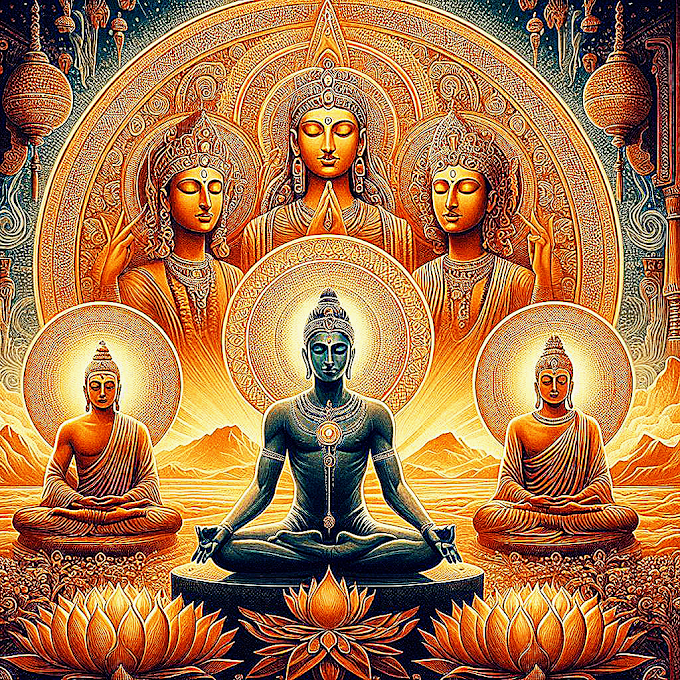
Explores Sri Aurobindo’s Integral Yoga—uniting body, mind, and spirit for divine transformation and evolutionary consciousness.
 |
Contribution of Sri Aurobindo to the Theory and Practice of Yoga |
Contribution of Sri Aurobindo to the Theory and Practice of Yoga
From Politician to Yogi: The Crucible of Transformation
Sri Aurobindo’s spiritual metamorphosis during his incarceration in Alipore Jail (1908–1909) marks one of the most profound turning points in modern Indian spiritual history. What began as a punitive measure by the British colonial government became, paradoxically, the womb of a new yogic vision—Integral Yoga.
Historical Context: The Alipore Conspiracy Case
In May 1908, following a bomb explosion in Muzaffarpur, Sri Aurobindo was arrested as the alleged mastermind behind revolutionary activities. He spent nearly a year in solitary confinement in Alipore Jail, awaiting trial. During this period, stripped of all political engagement, he turned inward.
In his own words:
“I have spoken of a year’s imprisonment. It would have been more appropriate to speak of a year’s living in a forest, in an ashram, hermitage... The British prison was that ashram. I found God.”
This poetic reframing of prison as a yogashram reveals the depth of his inner transformation. He described the experience as a sakshat darshan (direct vision) of Vasudeva—an encounter with the Divine as both immanent and transcendent.
The Role of Vishnu Bhaskar Lele: Inner Guidance over Outer Gurus
Before his arrest, Sri Aurobindo had a brief but pivotal encounter with Maharashtran yogi Vishnu Bhaskar Lele. Lele instructed him to silence the mind and await inner guidance. This method—radical for its time—freed Aurobindo from dependence on external rituals or teachers. He later wrote:
“I had no longer any need of help from outside, or of any Guru; the Divine within me had become my guide.”
This aligns with modern neuropsychological findings on meditation-induced neuroplasticity. Studies show that sustained meditative practice can rewire the brain’s default mode network (DMN), reducing ego-centric thought and enhancing intuitive cognition—what Aurobindo might call “psychic awakening.”
Scientific Parallels: Consciousness, Isolation, and Neuroplasticity
Sri Aurobindo’s transformation in solitary confinement mirrors findings in contemplative neuroscience:
- Isolation as Catalyst: Research on long-term meditators in retreat settings (e.g., Tibetan monks, Vipassana practitioners) shows increased activity in the anterior cingulate cortex and insula—regions linked to self-awareness and emotional regulation.
- Inner Guide Phenomenon: The shift from external instruction to inner knowing parallels the emergence of metacognition and intuitive insight in advanced meditators.
- Triple Transformation: His later model—psychic, spiritual, and supramental transformation—can be loosely mapped onto stages of cognitive development, emotional integration, and transpersonal consciousness explored in transpersonal psychology (e.g., Ken Wilber’s Integral Theory).
READ MORE:
The Seed of Integral Yoga: Consciousness as the True Revolution
Sri Aurobindo’s jail writings and reflections reveal a seismic shift in his worldview. He no longer saw political revolution as sufficient. Instead, he envisioned a consciousness revolution—a transformation of the human being from within.
“The only result of the wrath of the British Government was that I found God.”
This echoes the Gītā’s teaching that true action arises from inner alignment (yogaḥ karmasu kauśalam). Aurobindo’s later synthesis of Karma Yoga, Bhakti Yoga, and Jñāna Yoga into Integral Yoga was seeded in this crucible.
Textual Echoes and Literary Reflections
His later works—especially The Life Divine and Essays on the Gita—carry the imprint of this jail experience:
- The Life Divine explores how the Divine can manifest in matter, echoing his realization of Vasudeva in prison.
- Essays on the Gita reinterpret the battlefield as a metaphor for inner struggle, much like his own confrontation with ego, fear, and ignorance in confinement.
Example Revisited: The Alipore Jail as Ashram
Imagine a revolutionary, once immersed in political strategy, now sitting cross-legged in a dim cell, meditating on the Upaniṣads. The clang of prison bars becomes the rhythm of his sādhanā. The solitude, once feared, becomes sacred. In this paradoxical setting, Sri Aurobindo experiences the descent of divine consciousness—what he would later call the first stirrings of the Supermind.
From Outer Struggle to Inner Evolution
Sri Aurobindo’s transformation in Alipore Jail exemplifies the yogic principle that true liberation begins within. His journey from political firebrand to spiritual visionary was not a retreat from life but a deeper engagement with its essence. By turning inward, he laid the foundation for a yoga that seeks not escape but evolution—of the individual, the society, and ultimately, the species.
2. Defining Integral Yoga: Transformation, Not Escape
2.1 Beyond Renunciation to Liberation of Nature
Classical paths of yoga—Karma Yoga (action), Bhakti Yoga (devotion), Jñāna Yoga (knowledge), and Rāja Yoga (meditation)—often emphasize renunciation or the soul’s liberation from material existence. Sri Aurobindo redefined yoga’s goal: not merely liberation of the soul, but the liberation of body, life, mind, and matter through a divine descent into earthly existence. He wrote:
“The object of this Yoga is not to liberate the soul from Nature, but to liberate both soul and nature by sublimation into the Divine Consciousness from whom they came.”【Kayal】
This shift makes transformation the centerpiece: the world itself becomes a field for divine realization.
2.2 Synthesis of Classical Paths
Integral Yoga weaves together:
- Karma Yoga: offering all work as service to the Divine.
- Bhakti Yoga: nurturing an attitude of love and surrender.
- Jñāna Yoga: cultivating inner knowledge and discrimination.
- Rāja Yoga: developing mastery over mind via meditation and concentration.
- Hāta Yoga: harmonizing body and prāṇa to prepare for higher sādhanā.
Each path retains its unique flavor while contributing to a unified whole. For instance, daily chores become an exercise in Karma Yoga once performed with awareness, aspiration, and surrender.
Example: A student at the Sri Aurobindo Ashram might rise early, practice āsanas to align the body, spend midday offering academic work in silence, and close the day with bhajans (devotional songs), seamlessly blending action, devotion, and meditation.
3. Theoretical Innovations: Supermind and Evolution of Consciousness
3.1 Introducing Evolution into Vedanta
While classical Vedanta saw the world as a play of Māyā (illusion), Aurobindo reframed it as Līlā—a divine manifestation. He rejected materialistic readings of Darwin and the fatalism of strict Advaita, proposing instead that spiritual evolution drives the emergence of life, mind, and ultimately supermind.
“Consciousness is the life-force, the energy, the motion that creates everything in the universe, from the microcosm to the macrocosm.”【Kayal】
3.2 The Supermind: Bridge between Spirit and Matter
Aurobindo’s hallmark concept, the Supermind (Su-jnāna), functions as the dynamic intermediary between the transcendent Divine (Sat-Chit-Ānanda) and the limited human mind. Supermind is “truth-consciousness”—it exacts the divine blueprint and actualizes it in forms and actions without the distortions of ego or ignorance.
Ascent and Descent
- Ascent: Consciousness evolves from Matter → Life → Mind → Overmind → Supermind.
- Descent: Supermind descends and transforms Overmind, Mind, Life, and Matter, completing the cycle of divine incarnation.
Example: Sri Aurobindo described moments of supramental illumination where intuitive insight (beyond rational thought) provided solutions to social or scientific dilemmas—hinting at a future civilisation guided by higher knowing.
4. The Sādhanā of Integral Yoga
Integral Yoga unfolds through three interlinked movements:
4.1 Triple Transformation
- Psychic Transformation
Awakening and heightening of the soul (psychic being) leads to inner unity and alignment with one’s deepest purpose. - Spiritual Transformation
Expansion of consciousness through intuitive and revelatory experiences—light enters the mind, purifying thoughts and emotions. - Supramental Transformation
Radical shift where the supramental consciousness fully descends and transforms the physical body, emotions, and intellect into divine instruments.
Example: A practitioner may first sense a quiet guiding presence (psychic awakening), then begin to perceive situations through intuitive clarity (spiritual shift), and ultimately find habitual mental patterns and even physiological tendencies transformed (supramental change).
4.2 Three Inner Foundations
- Aspiration and Surrender: Cultivating an unwavering longing for the Divine and offering one’s ego, desires, and fears in full trust.
- Rejection (Vikṣepa): Conscious refusal of negative impulses—anger, vanity, attachment—that block transformation.
- Invocation: Calling down the divine Grace to work within every facet of one’s being.
These form a loop: aspiration invites Grace; Grace enables rejection of obstacles; freedom from obstacles heightens aspiration.
 |
| Contribution of Sri Aurobindo to the Theory and Practice of Yoga |
4.3 Daily Life as Sādhanā
Aurobindo insisted “All life is Yoga.” Even routine interactions or professional duties become spiritual exercises when performed with:
- Mindful attention
- Devotional attitude
- Offering of results to a higher purpose
Example: A teacher in an Aurobindo school uses every lesson not just to impart information but to awaken students’ inner potential, blending intellectual rigor with moral and psychic formation.
5. Integral Education: Cultivating the Whole Being
Sri Aurobindo’s vision extended yoga into education. Rejecting rote learning, he proposed an integral pedagogy:
- Five Aspects of Education: Physical, vital (life-forces), mental, psychic, spiritual.
- Three Principles of Teaching:
- “Nothing can be taught”—each learner discovers truth within.
- “Psyche must be counseled”—education must respect individual rhythm.
- “Plan from near to far”—build from concrete to abstract, from apparent to subtle.
By developing athletics (physical), art and literature (vital), critical thought (mental), heartfelt values (psychic), and silent meditation (spiritual), the student becomes an integrated being.
Example: At the Sri Aurobindo International Centre of Education, children engage in gardening (care for life), music (vital harmony), mathematics (mental precision), community service (psychic aspiration), and quiet reflection (spiritual opening)—all interwoven into a single curriculum.
6. Cultural and Institutional Legacy
6.1 Sri Aurobindo Ashram and The Mother
In Pondicherry, Mirra Alfassa (“The Mother”) collaborated with Sri Aurobindo to translate theory into community life. Over decades, they guided thousands in Integral Yoga sādhanā, refining methods and building an environment attuned to higher vibrations.
6.2 Auroville: Experiment in Collective Evolution
Founded in 1968 as an international township, Auroville embodies the principle that individual spiritual progress catalyzes social transformation. Residents of diverse backgrounds apply Integral Yoga principles to architecture, governance, and ecological stewardship—seeking a supramental society.
6.3 Influence on Contemporary Yoga and Well-Being
Modern yoga teachers increasingly incorporate Aurobindo’s ideas:
- Emphasis on mind–body integration and conscious living rather than mere physical exercise.
- Use of psychic presence and intuitive listening in therapeutic settings.
- Integration of evolutionary psychology and quantum consciousness in advanced workshops.
7. Illustrative Case Studies
7.1 The Mother’s Supramental Descent
In the late 1930s, The Mother described sudden outpourings of light throughout her body with a sense of all cellular structures realigning. Practitioners around her reported subtle shifts in their own awareness—an embodiment of supramental transformation.
7.2 Journalistic Inspiration through Vision
While editing his journal Arya, Sri Aurobindo received flashes of insight that shaped articles on culture, politics, and education—writing not from purely intellectual research but from an emergent supramental vision, blending philosophy with actionable guidance.
8. Relevance for the Twenty-First Century
Sri Aurobindo’s Integral Yoga remains remarkably prescient:
- Holistic Well-Being: In a time of fragmented lifestyles, his integrated approach to body, mind, and spirit offers a sustainable path to balance and authenticity.
- Evolutionary Leadership: As organizations seek adaptive, creative thinkers, the cultivation of higher consciousness and psychic unity becomes a differentiator.
- Global Challenges: Environmental crises and social upheavals call for a transformative worldview that transcends polarities—Aurobindo’s vision of Līlā and evolutionary destiny provides an inspiring framework.
Example: A corporate retreat based on Integral Yoga principles might begin with silent meditation, flow into team-building through conscious action, and conclude with reflective dialogue—aiming not just at enhanced productivity but at collective upliftment of consciousness.
9. Conclusion
Sri Aurobindo’s Integral Yoga stands as a towering contribution to both the philosophical foundations and practical methodologies of yoga. By synthesizing classical paths, introducing the Supermind and evolutionary consciousness, and applying yoga to education, politics, and daily life, he has shaped a living tradition that speaks directly to contemporary needs. His insistence that “divine perfection” can manifest here on earth invites each seeker to participate in the co-creation of a higher humanity—one cell, one community, one world at a time.
Through the Triple Transformation, the descent of supramental force, and the integration of action, devotion, knowledge, and meditation, Sri Aurobindo bequeathed a path that transcends mere self-realization. It points toward the realization of a divine life in every aspect of existence, calling us to evolve collectively toward the next stage of human destiny.
Resources on Sri Aurobindo’s Yogic Contribution
- Auroville’s Official Page, Sri Aurobindo's Teaching and Spiritual Method – Auroville Explains his core idea: “All life is yoga”, and how his method combines psychological discipline with yogic practice to evolve consciousness.
- Philosophy Institute Overview, Exploring Sri Aurobindo’s Life and Philosophical Contributions Covers his journey from political activism to spiritual leadership, and how he developed Integral Yoga to integrate divine consciousness into daily life.
- Book: The Integral Yoga by Sri Aurobindo, India A collection of letters and teachings that explain his spiritual method, psychological foundations, and how it differs from traditional yoga paths.
- Integral Yoga: Not just physical or meditative—it’s a full transformation of body, mind, and spirit to manifest divine consciousness in life.
- Supermind: A higher state of consciousness beyond the mind, which Sri Aurobindo believed was the next step in human evolution.
- Spiritual Evolution: Yoga is a tool to evolve the soul and bring harmony between inner divinity and outer action.


.png)